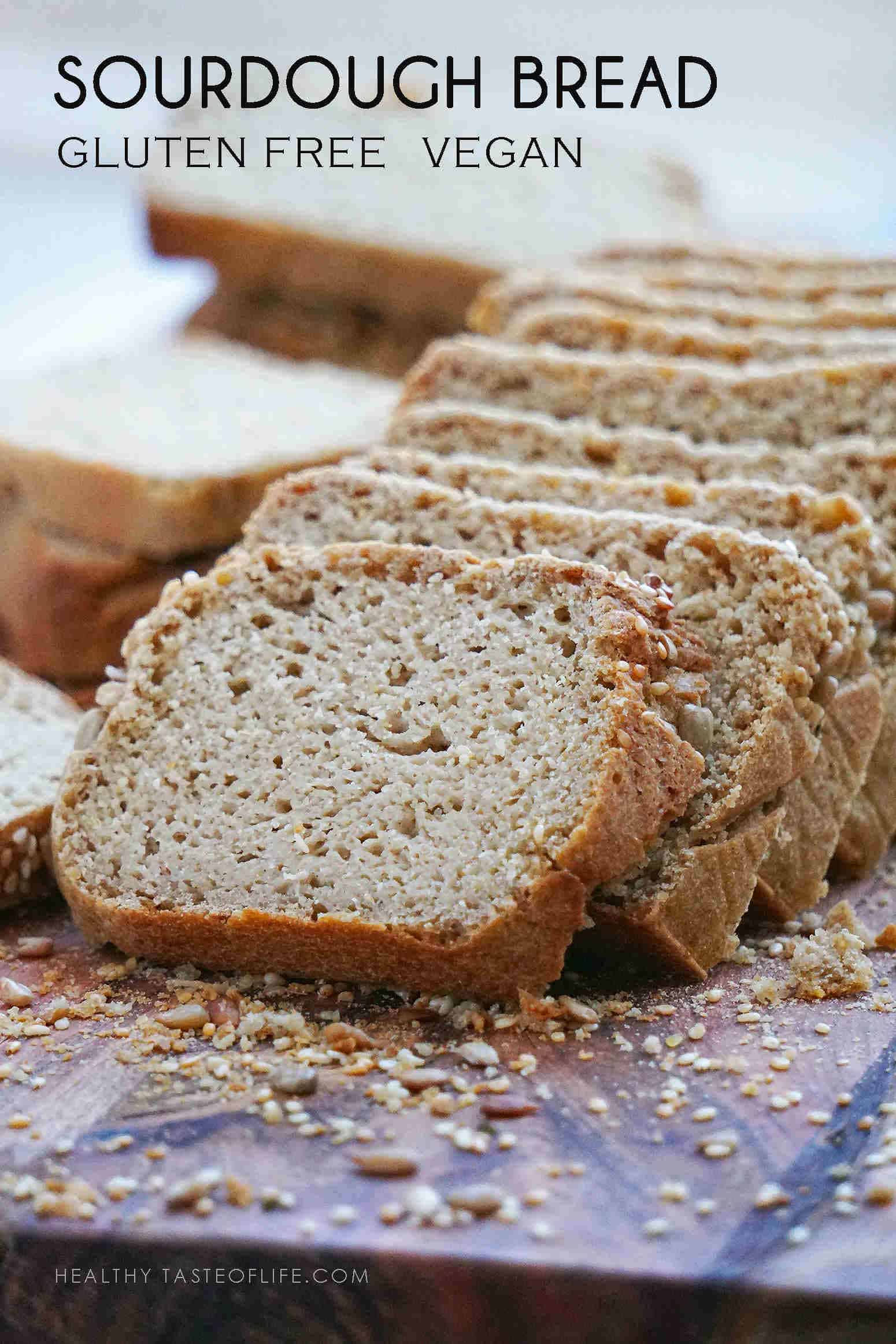
Contains affiliate links; commissions may be earned.
As an Amazon Associate I earn from qualifying purchases.
Disclosure
Total Time:
9 hours hrs 10 minutes mins
Yields:
14 slices
Recipe
Video
Rate/Comment
This is my family’s everyday gluten free sourdough bread: vegan, no commercial yeast, no xanthan gum, no oils and no psyllium. It’s made with gluten free sourdough starter and sprouted whole-grain flours for a soft, sliceable crumb that toasts beautifully.
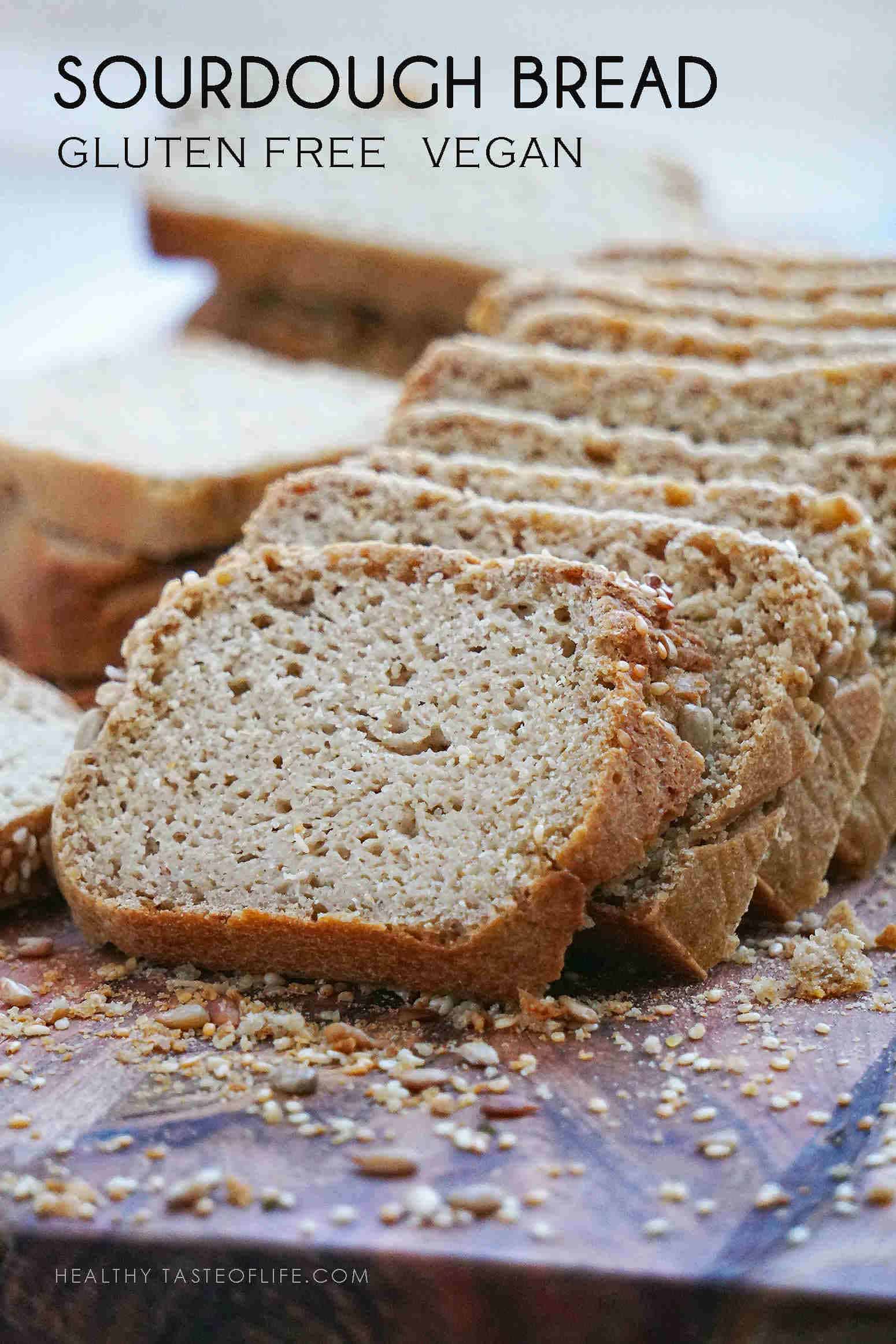
Sliced gluten-free sourdough loaf: vegan, no commercial yeast, no xanthan.
Jump To ⬇
- Why This Loaf Works
- Key Ingredients (And Simple Swaps)
- How To Make It
- FAQs
- Video: How to Make Gluten-Free Sourdough Bread (No Yeast, No Xanthan | Vegan)
- Gluten-Free Sourdough Bread (Vegan, No Yeast, No Xanthan, No Psyllium)
- PRO TIPS: Baking Gluten Free Sourdough Bread
- How To Store
- More Healthy Gluten Free Bread Recipes
- Extra Recipes Made With Gluten Free Sourdough Starter
Back in 2018, most gluten free breads I could find leaned on gums and heavy refined starch blends low in fiber/nutrients and not the simple, whole food slices I wanted (especially for a sensitive digestion). It also seemed “impossible” to get a tall, sliceable loaf without all those add-ins. So I started testing my own: whole-grain flours, no commercial yeast, gum free binders, and a strong GF starter. A plain loaf with good texture is much harder to achieve than banana bread or small buns, there’s no eggs, and no fruit to add softness, no shortcut with baking soda or powder + acid, so the starter had to do the real work, and it does.
Why This Loaf Works
- No commercial yeast – naturally leavened by a GF sourdough starter, just real ingredients doing the work.
- No xanthan gum – gentle binders (flax; optional psyllium) for structure. Some people report GI discomfort (me included) when using gums.
- No oil – no cheap oil like canola or other seed oils.
- Sprouted, whole-grain flours – great flavor, may improve mineral availability after sprouting and easier to digest, hence healthier.
- Sliceable crumb – batter-style dough bakes tall in a loaf tin, no Dutch oven needed.
So to ensure a well risen loaf with a good structure, I had to get my hands on an active gluten free sourdough starter. I admit, at first I was a bit intimidated because I wasn’t sure what I would do with so much starter, but then I realized that it can be used for so many recipes.
Since baking gluten free so often, I managed to switch entirely to only using sourdough and I use it in most of my favorite breads, rolls, tortillas, muffins and naan, you can find these in my cookbook too.
Key Ingredients (And Simple Swaps)
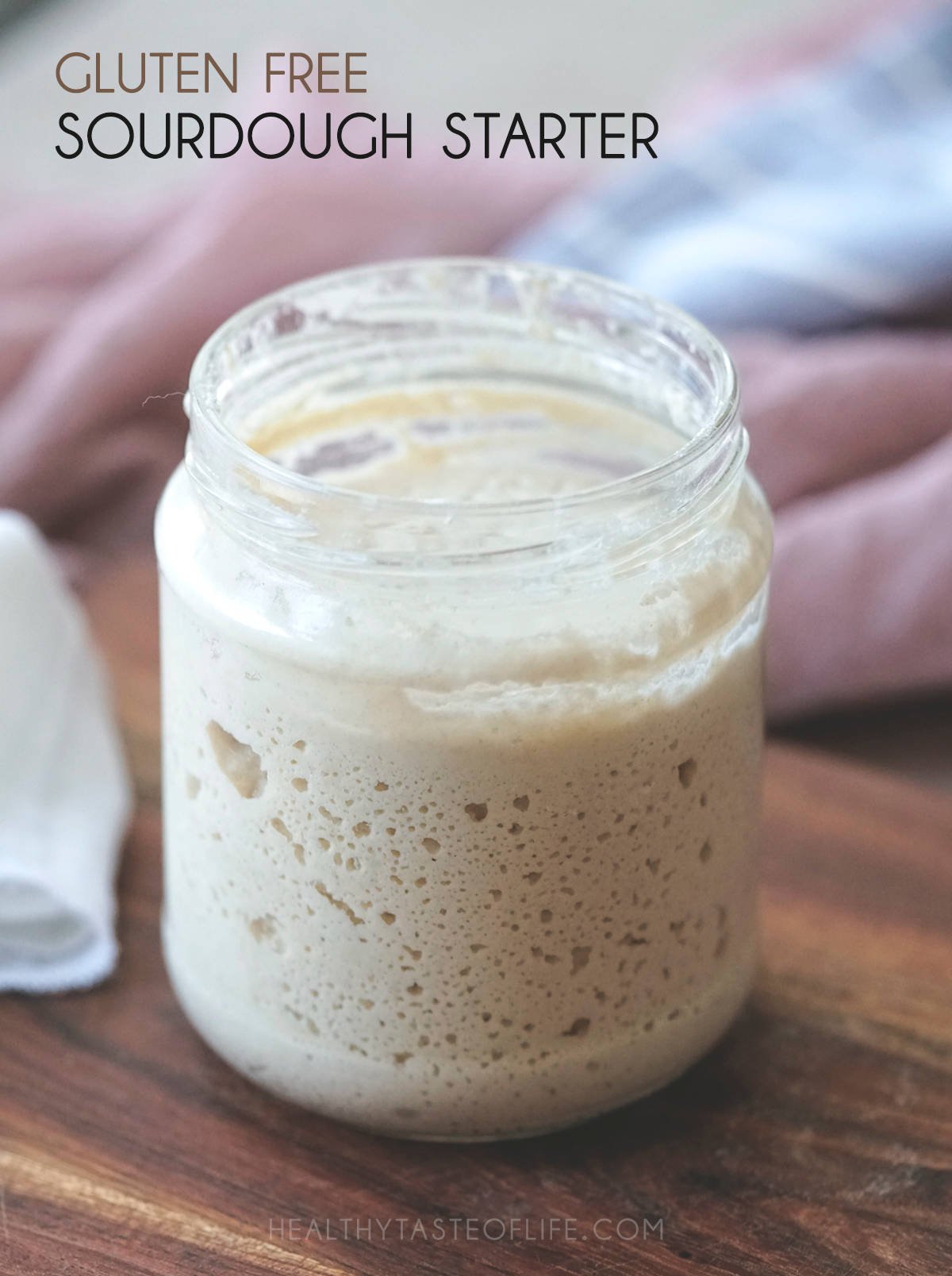
- GF sourdough starter (active): fed and bubbly. See how I feed and store my GF starter tutorial.
- Flours: light buckwheat + millet or oat (sprouted versions if you have them, are the best).
- Binder: ground flax (primary).
- Water, sea salt. Small maple touch is optional for flavor/rise.
Note on oats: If using oat flour, choose gluten-free labeled (and organic, ideally trusted source) due to common cross contact in the supply chain. Some people also react to oat avenin.
See all measurements in the recipe card:
How To Make It
Step 1. Wake The Starter
You will need to use only 1 cup of starter for the recipe. Activate it with flour (1/2 cup of brown rice flour) + water (1/2 cup of filtered water)+(3-5h warm spot) until bubbly. If your starter is thin and watery, use less water (about 1/3 cup), if it’s thick – use more. I’m using a gluten free sourdough starter from Cultures For Health (maintained with brown rice flour).
Keep in mind that this recipe uses an established GF starter. Take the amount of starter you need, the rest feed it and place it back in the fridge. If your starter is sluggish, give it one extra feed before mixing the dough.
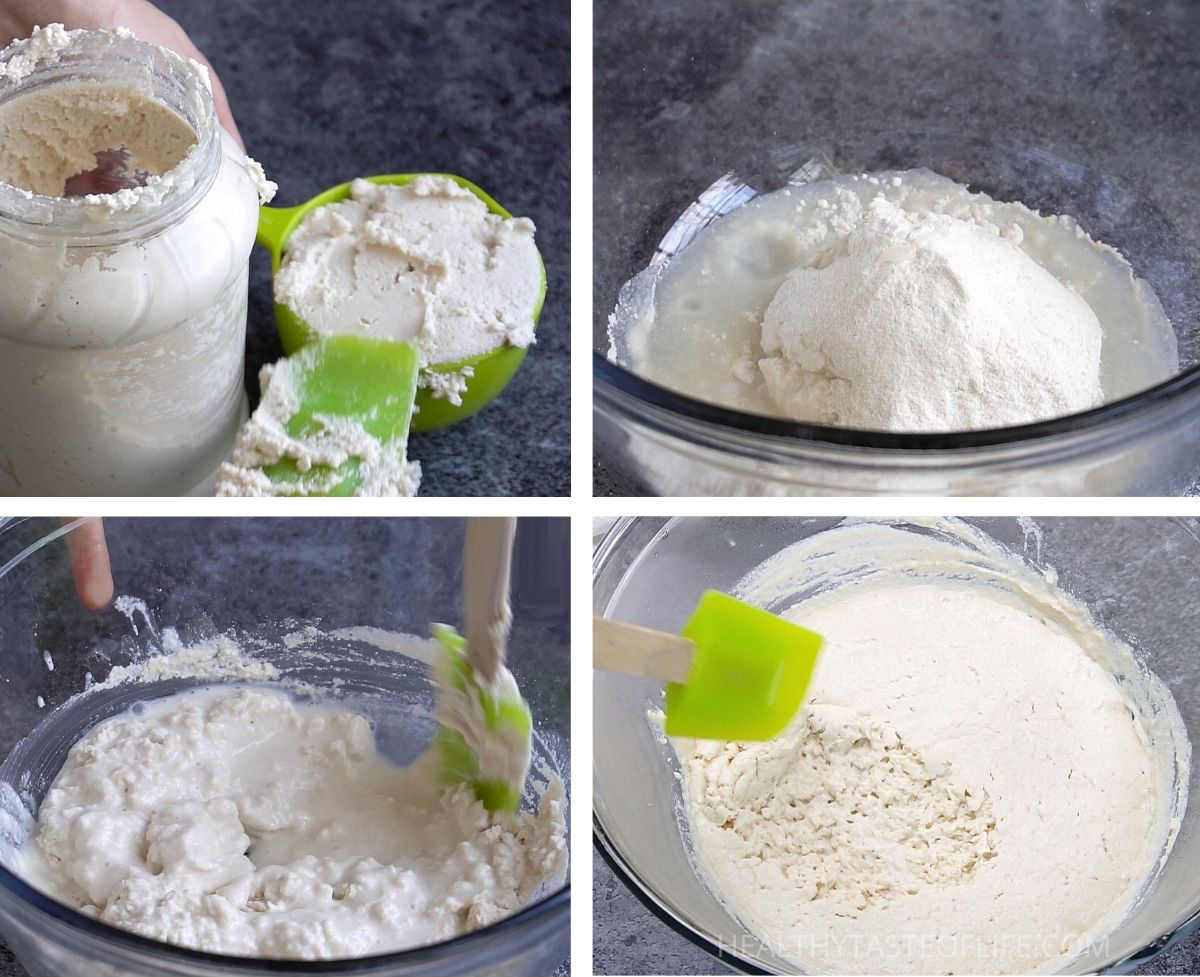
Activating the GF sourdough starter first.
Step 2. Mix a thick batter (no kneading)
- When your starter is active and bubbly, add the flours (sifted), water, salt and maple syrup (it’s optional, but I use to enhance the taste plus the sugar makes the bread rise faster). Use same bowl.
- The dough should look like a thick batter like a thick oatmeal porridge, or like a brownie batter once everything mixed. No kneading is required.
Step 3. Proof
- Scrape the dough into the pan (use a in a high-wall loaf tin) and smooth it out with a spatula (the final batter is pretty sticky) to produce a nice dome shape. Add seeds or nuts on top if you want.
- Cover with a plastic wrap or a towel to seal moisture (you can also spray the inside of the wrap with water to prevent dough cracking) and let it rise in a warm place approximately 4-5 hours. It depends on how warm is your kitchen.
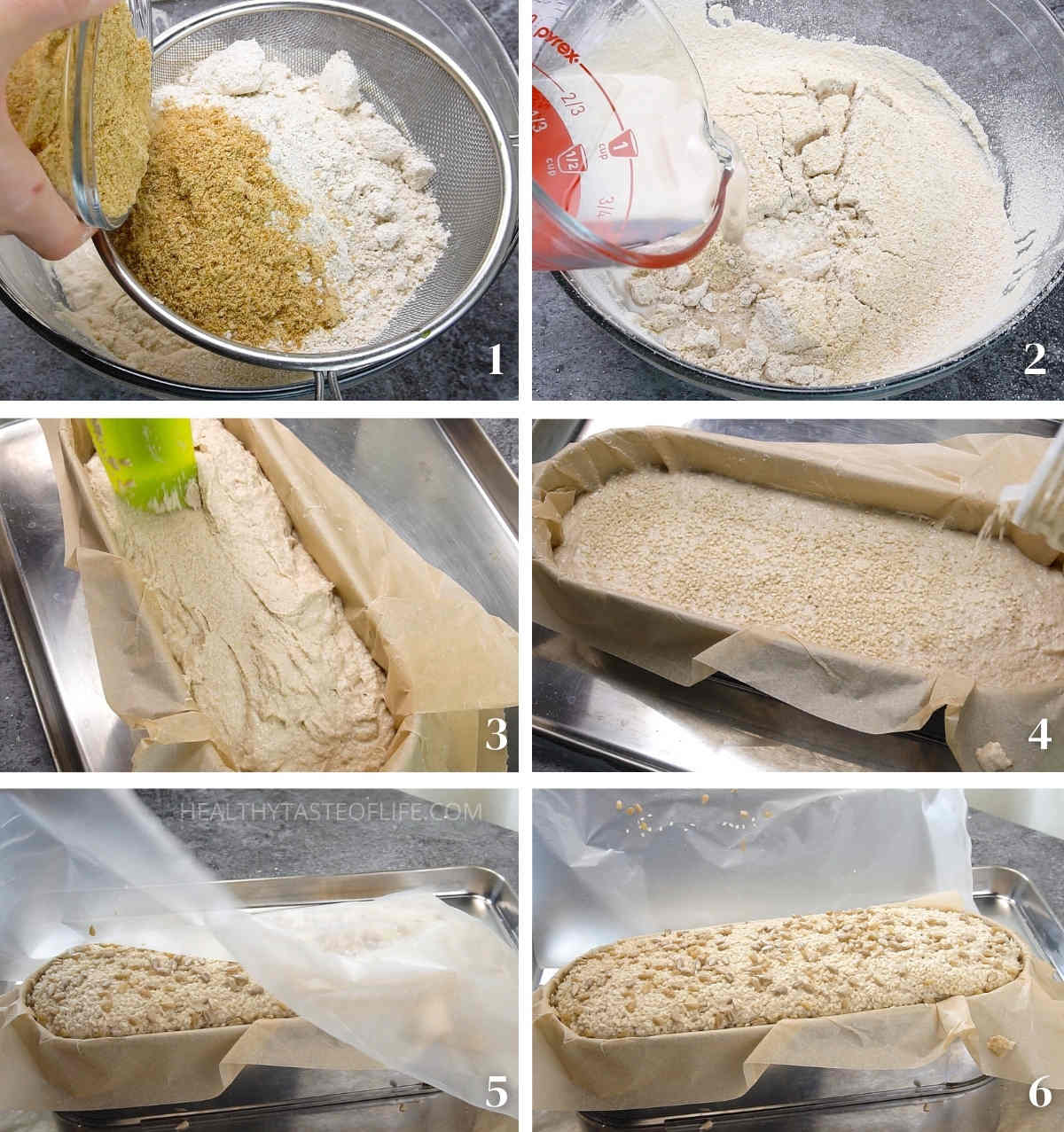
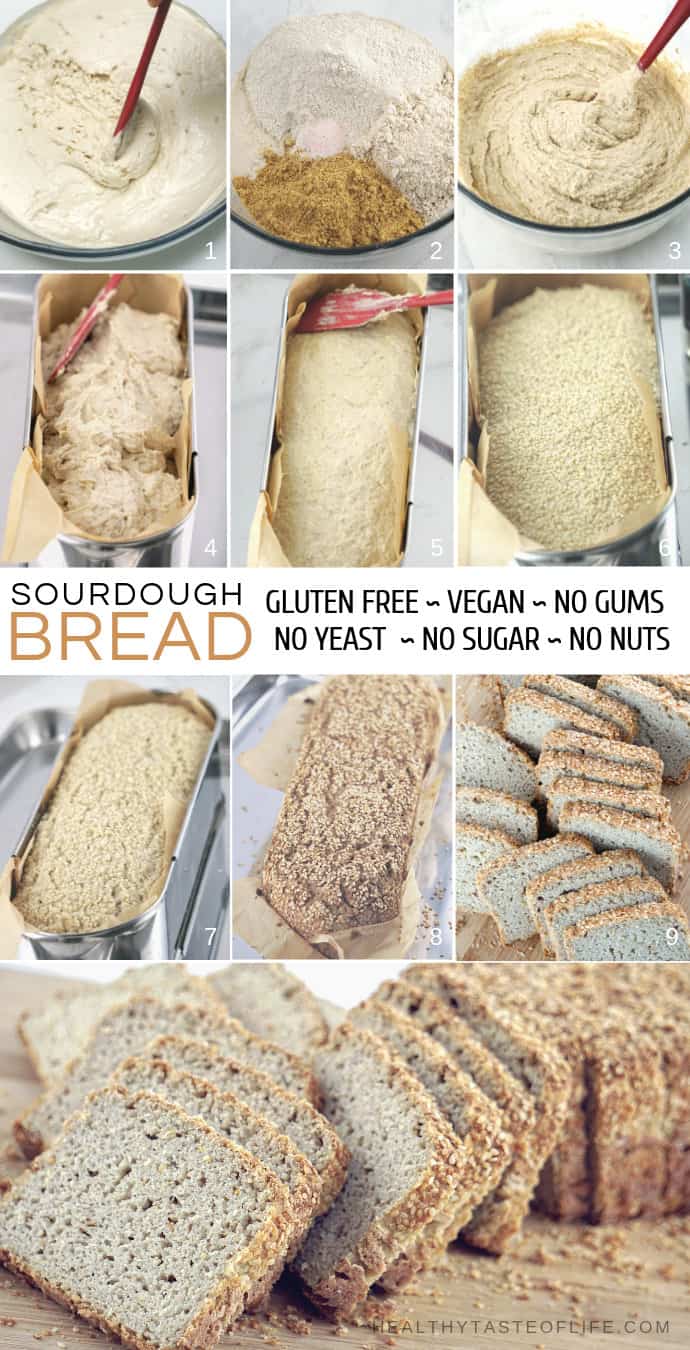
The process of making the bread: mix GF sourdough batter, proof in loaf tin, bake.
Tip: Best baking dish for GF sourdough
Skip the Dutch oven for this batter loaf. Gluten-free batter-style dough needs tall walls to rise up (not out). So here are two reliable options I always use:
- Adjustable oval baking frame (no base): slips off for easy release and resizes for different loaf sizes.
- High-wall non-stick loaf tin: supports vertical lift; parchment paper not needed, very easy to take out once baked.
If you want your loaf to stand up on it’s own, you can add high starch flours. But I prefer a more nutritional gluten free bread made with whole grain flours only.
Step 4. Bake
- Preheat oven at 425 degrees F (220 C).
- Once ready to bake the bread, cover with an aluminum foil (without touching it, any shake-up can deflate it), turn the temperature down to 390 F (200 C) and bake for 30 minutes.
- Then remove the foil (at this time you can also remove the baking tin for an uniform baking on all sides) and bake for another 40-45 minutes until golden brown.
- Allow to cool completely before handling or slicing (use a serrated knife)! Best to do that the next day.
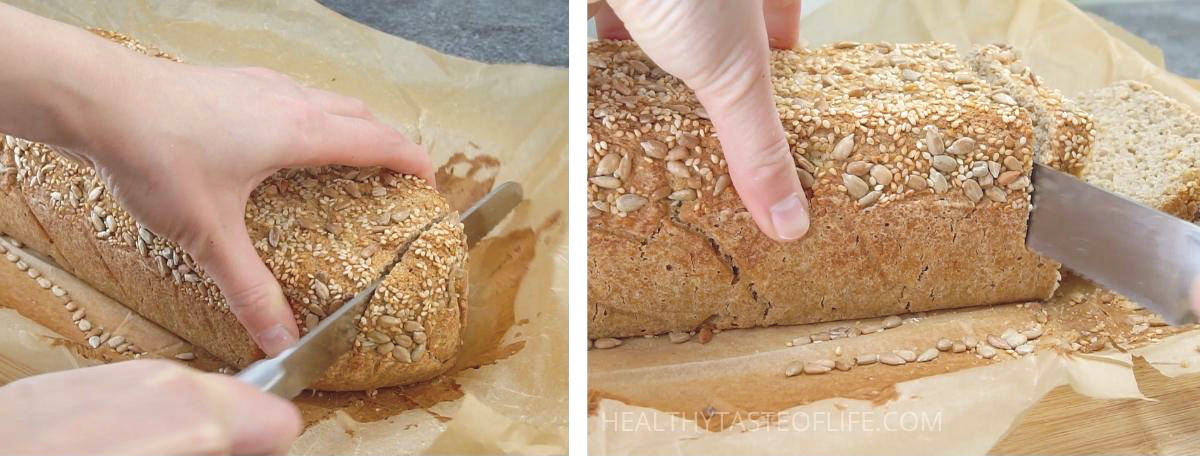
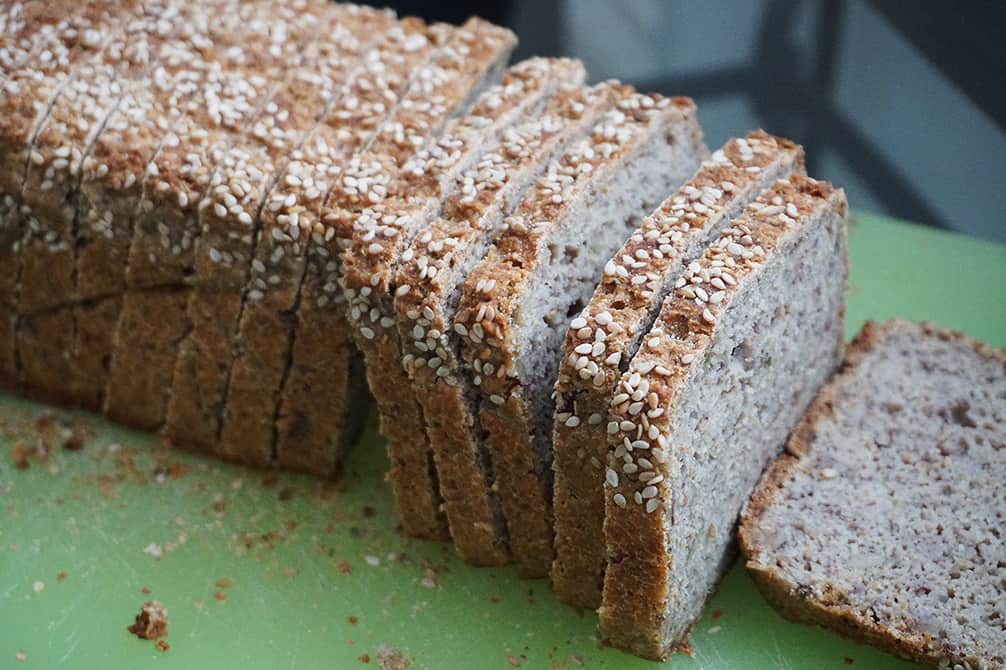
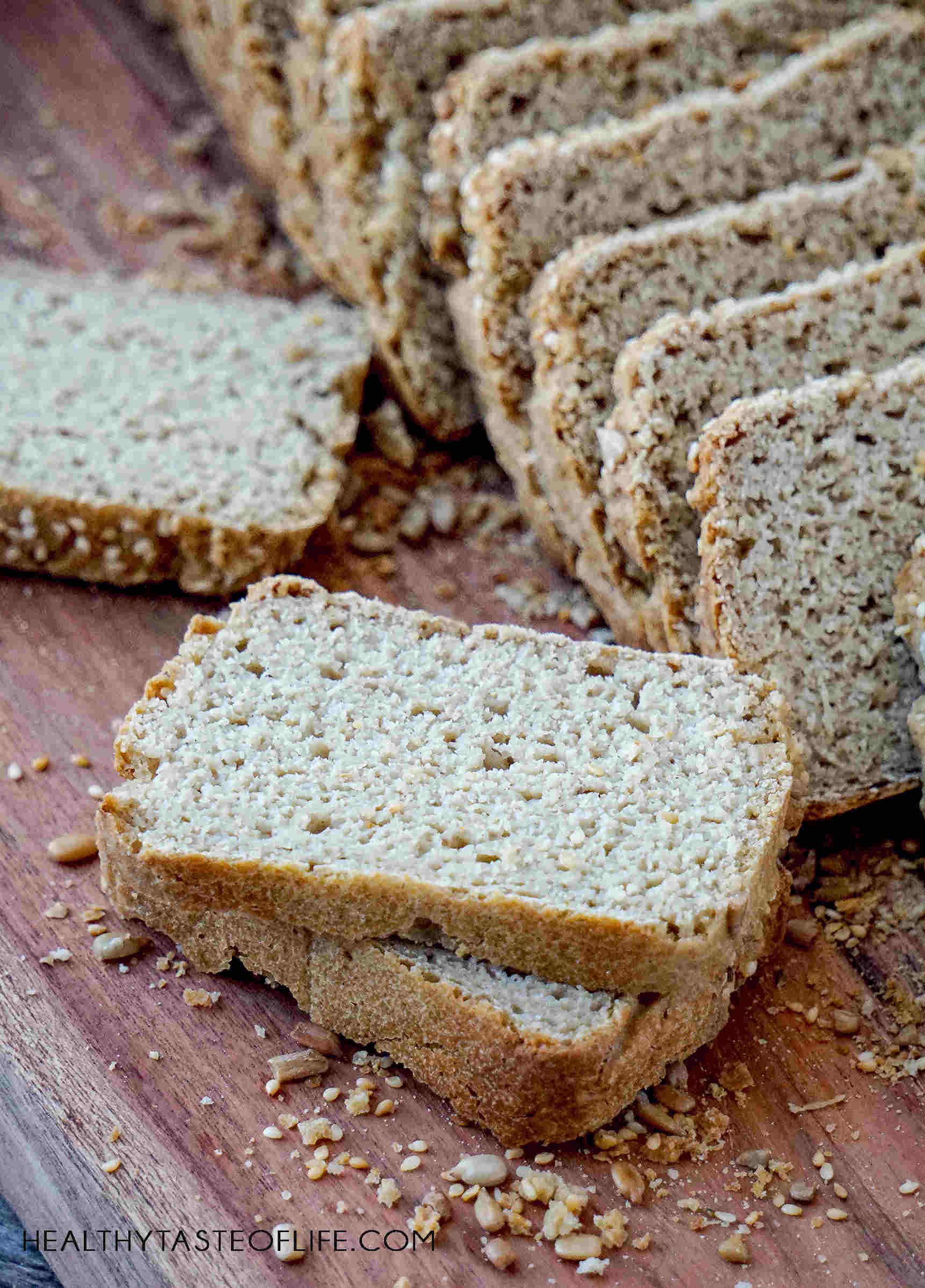
Sliced crumb, showing texture.
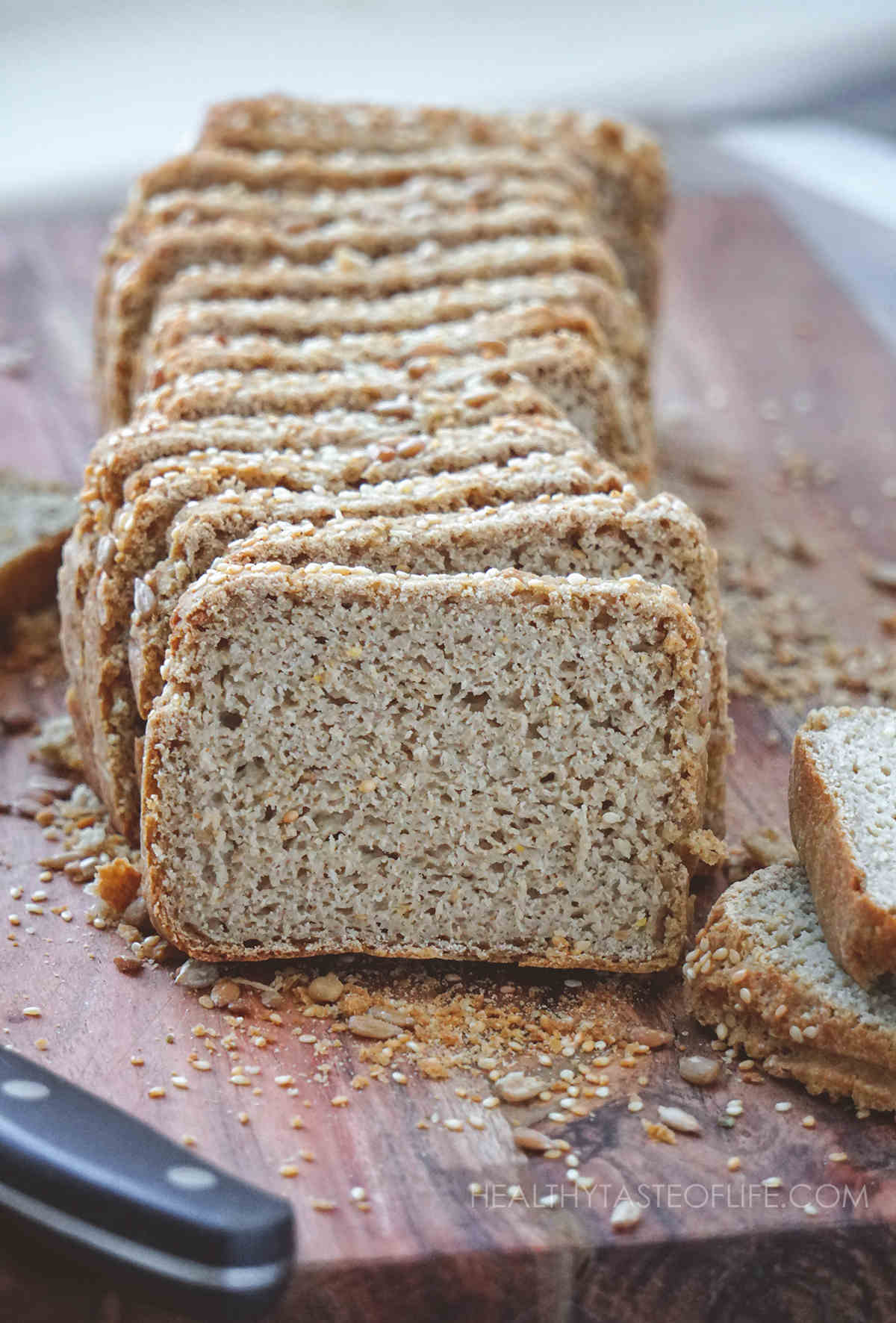
Sliced gluten free vegan sourdough bread.
FAQs
Is this bread “yeast-free”?
It contains no commercial baker’s yeast. Like all sourdough, it’s naturally leavened by wild yeasts and lactic acid bacteria in the starter.
Does sourdough fermentation make wheat safe for celiac?
No. Fermentation does not reliably remove gluten from wheat or rye. This loaf is gluten-free because it uses gluten-free flours only.
Is sourdough easier to digest?
Long fermentation can reduce certain FODMAPs and modify starches, which some people find gentler; benefits vary person to person.
Why sprouted flours?
Sprouting can lower phytate and may improve mineral bioaccessibility, depending on grain and conditions.
Can oat flour be used in sourdough starter?
Oat flour usually performs not very well when used to grow a gluten free sourdough starter.
Video: How to Make Gluten-Free Sourdough Bread (No Yeast, No Xanthan | Vegan)
Watch the batter texture and proofing height.
Gluten-Free Sourdough Bread (Vegan, No Yeast, No Xanthan, No Psyllium)
A sliceable gluten-free sourdough loaf that’s vegan, no commercial yeast, no psyllium and no xanthan gum. Built on sprouted whole-grain flours for a healthier and still soft crumb/toast. This recipe that doesn’t require kneading shaping or a Dutch oven.
Cook Mode
Prevent your screen from going dark
Prep Time
10 minutes mins
Cook Time
1 hour hr
Fermenting Time
8 hours hrs
Total Time
9 hours hrs 10 minutes mins
Course:
Appetizer, Breakfast, Dinner, Lunch, Side Dish, Snack
Cuisine:
Clean Eating, DairyFree, Gluten Free, Nut Free, Sugar Free, Vegan
Diet:
Gluten Free
Servings:
14 slices
Calories:
136.5kcal
Author:
Olga Caz
Pin Recipe
Save Saved!
Ingredients 1x 2x 3x
Activate The Gluten Free Sourdough Starter
- 1 cup gluten free sourdough starter – active ~ 240 g (100% hydration)
- ½ cup brown rice flour – (80g) to revive the starter
- ½ cup filtered water, room temperature – 118 ml (adjust if needed)
Main Batter (Add to The Activated Starter)
- 1 cup buckwheat flour – (120g) light color
- 1 cup millet flour – (120g), if oat flour (100g) if sorghum flour (120g)
- ⅓ cup flax seeds – (37g) ground
- 1½ cup filtered water – (355 ml) or plant milk
- 1 tsp Himalayan pink salt – (5g) or 1/2 tsp sea salt
Optional
- 1 tbsp maple syrup – (15 ml)
Instructions
Wake The Starter
- Take your (previously established) refrigerated starter and scoop 1 cup (that’s all you need for this recipe).
- Feed it with brown rice flour (1/2 cup) and water (1/2 cup) mix in a large bowl; Rest in a warm place, covered: 3–5 hours until light and bubbly (depends on room temperature). Feed the rest of the starter in the jar and place it back in the fridge (or use for another recipe). See notes for troubleshooting.
Mix The Batter
- Once the starter is awake (is bubbling regularly within a few hours of feeding) – in the same bowl, add the rest of ingredients: flours, ground flax (all sifted) salt, and maple; Mix to a thick, scoopable batter (like brownie batter). No kneading is required.
Pan and Proof
- In a high wall non-stick loaf tin, scrape in batter; No parchment paper needed here. Smooth it out with a spatula to produce a nice dome shape. Since the batter is very sticky, I use parchment paper when I’m using my extendable baking tin (it has no bottom, just walls), so it’s easy to remove while baking.
- Add seeds or nuts on top if you want. Mist a cover (wrap, foil or towel) and cover. Proof warm until noticeably domed (about 4–5 hours, room-temp dependent).
Bake
- Preheat 425°F (220°C).
- Uncover, tent with foil (not touching batter, it’s really sensitive and collapsible). Reduce to 390°F (200°C) and bake for 30 min.
- Then remove the foil (at this time you can also remove the baking tin for an uniform baking on all sides) and bake for another 40-45 minutes until golden brown.
Cool And Slice
- Cool in tin 10–15 min, then on a rack until fully cool before handling. For best slices, wrap and slice next day with a serrated knife.
Video
If the video is not showing, try to disable your add blocker.
Notes
- Do not shake or touch the dough once it has risen and is ready to bake, it will collapse and lose it’s shape.
- Topping bread dough with seeds and grains is a great way to develop even more crunch and depth of flavor. You can experiment with mixing seeds, nuts and dried fruit.
- For a lighter in color bread use lighter gluten free flours, read more about choosing the right flours in the post above.
- If you can’t find gluten free (and organic) oat flour, use your blender to grind some rolled oats.
- If you want your gluten free sourdough bread to be more sour you can keep it 1 hour longer to ferment, otherwise you won’t feel the sourness much.
- Whole grain flours tend to contain more organisms to feed the yeasts and bacteria. Switching from a whole grain flour to white flour may cause a decline in the health of the starter.
- Switch flours only when your sourdough starter has been fed for at least a week and is healthy, bubbling and growing.
ADDITIONAL TIPS:
- Pan choice: a tall loaf tin helps vertical lift, especially when the batter is soft and sticky like a porridge.
- The ground flax seeds act as a binder and help the gluten free sourdough bread form a better structure. They are stable during baking and do not loose their health benefits like the flax seed oil does at high temperatures. I also experimented with adding more ground flax seeds (increased from 1/2 cup to 2/3 cup) and added 1/2 cup more water – turned out even better.
- More elasticity: if you add 1 tbsp psyllium husk to the batter – will add elasticity, flexibility and pliability to the bread) even more. If you try it, make sure to mix it with 3 tbsp of water first.
Tried this recipe?Mention @HealthyTasteOfLife or tag #healthytasteoflife!
Nutrition
Serving: 1slice
|
Calories: 136.5kcal
|
Carbohydrates: 26.5g
|
Protein: 4.1g
|
Sodium: 22mg
|
Potassium: 144.8mg
|
Fiber: 3.5g
|
Sugar: 1.2g
|
Calcium: 7mg
|
Iron: 1.5mg
The information shown is an estimate provided by an online nutrition calculator.
PRO TIPS: Baking Gluten Free Sourdough Bread
- Flour Mix: Aim for a mix, not a mono-flour: roughly 70% medium density flours (buckwheat, millet, oat), 10% heavier/coarse (teff/quinoa/amaranth), 20% soft/fine (oat or finely milled rice). This balances lift, moisture, and chew. Choose finely milled flours for a less crumbly slice.
- Want a lighter crumb? Use light buckwheat (hulled) and sorghum/oat (choose GF labels).
- Want a heartier, darker loaf? Use dark buckwheat (unhulled) and more whole grain sorghum/teff.
- Whole grain flours tend to contain more organisms to feed the yeasts and bacteria. Switching from a whole grain flour to white flour may cause a decline in the health of the starter.
- Egg-free structure, gum-free feel: Ground flax is the primary binder here, stable during baking and great for sliceability, don’t skip it.
- More starter = faster rise (and you can proof a bit cooler).
- Tang control: shorter proof = milder; longer = more sour.
- Proof high, bake hot: cover for steam, then uncover to color.
How To Store
Slice. Keeps 3–4 days at room temperature in a breathable bag; If longer, keep in the freezer (flat in bags) and toast from frozen anytime. Personally I like double toasting or toasting at the highest intensity of my toaster, the texture and smell is just incredible!
More Healthy Gluten Free Bread Recipes
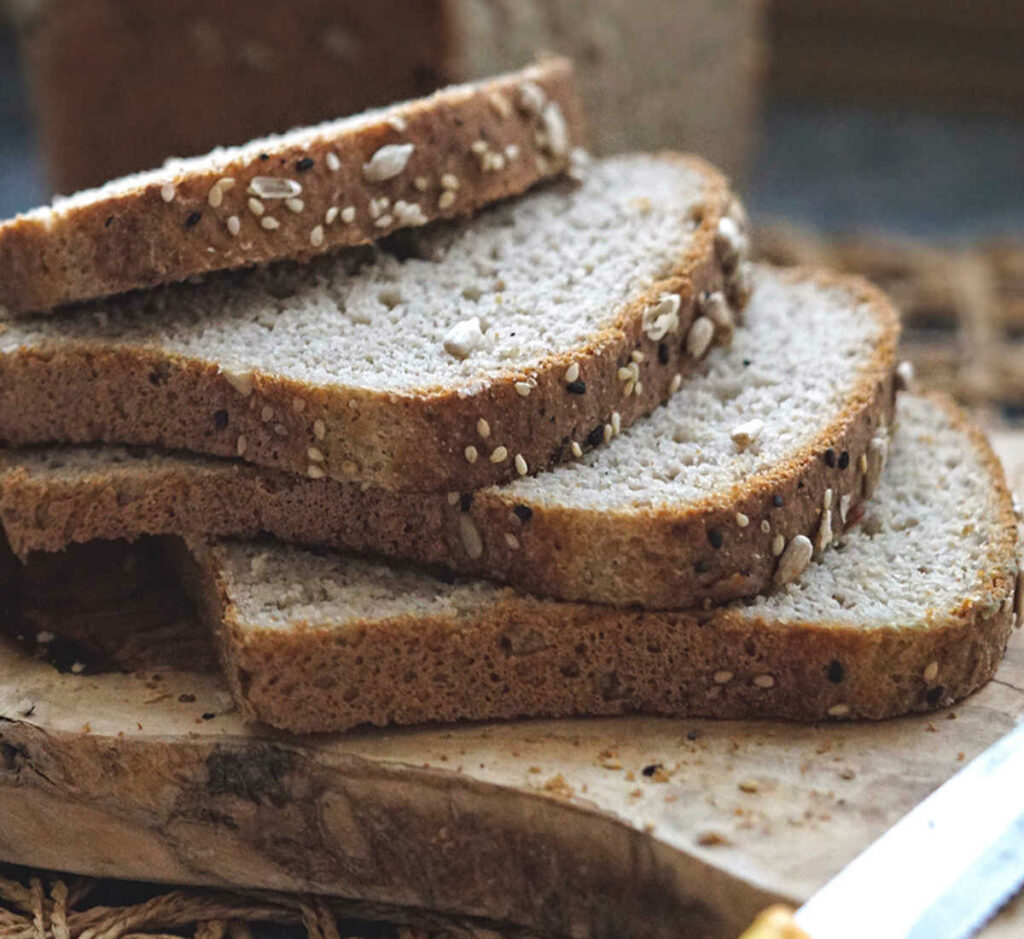
Soft Buckwheat Bread Recipe (GF, DF)
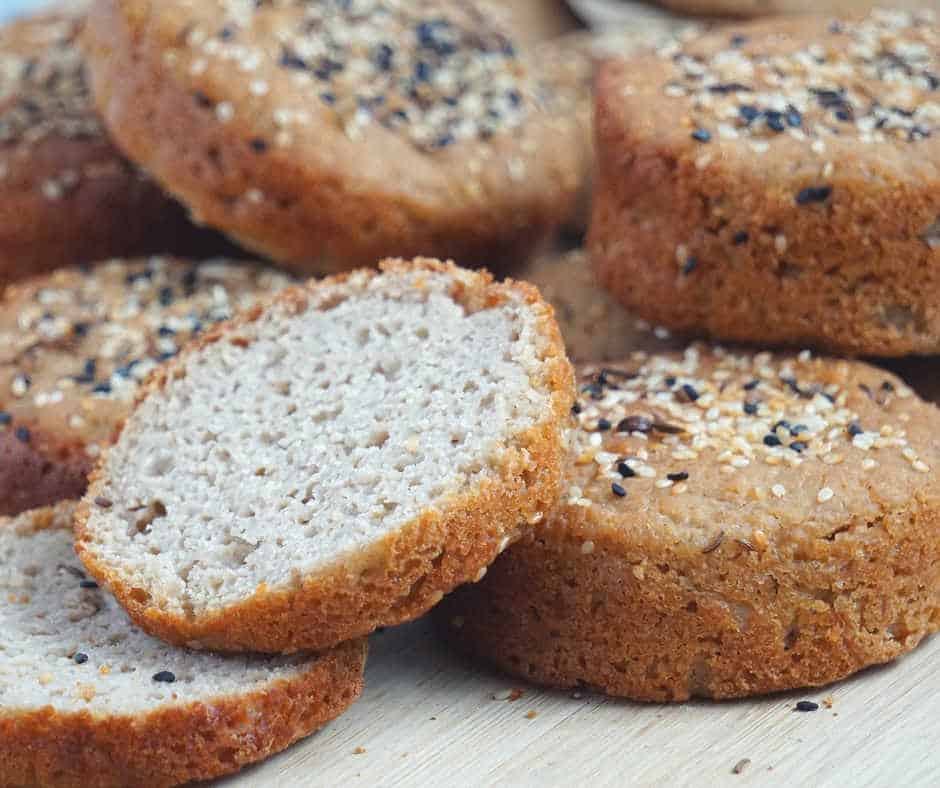
Gluten Free Sourdough Buns (No Egg, Vegan)
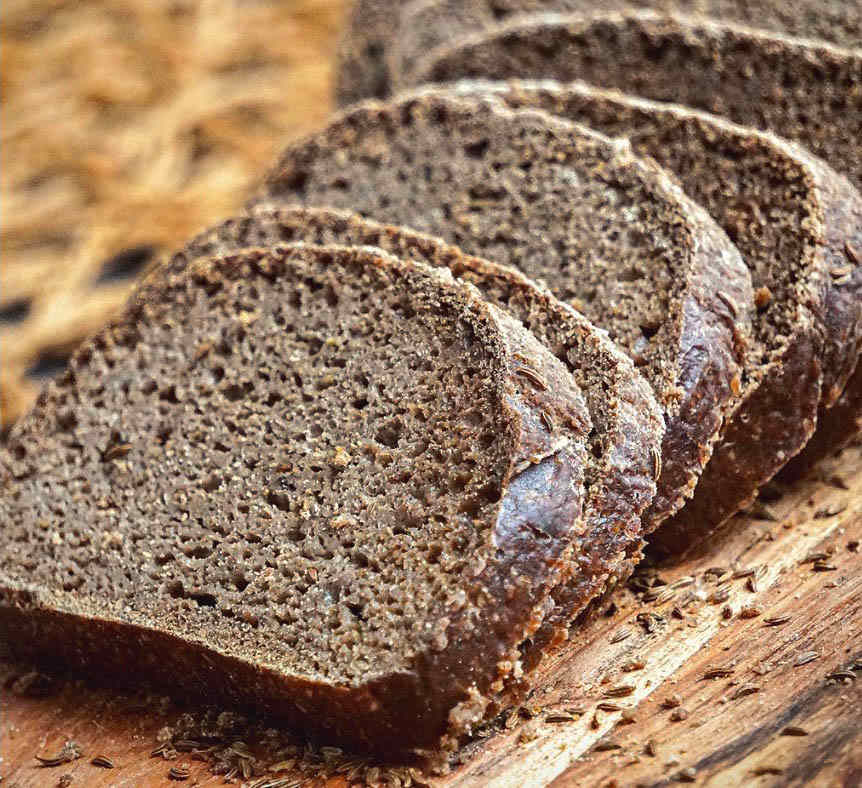
Teff & Buckwheat Sourdough Bread (GF Pumpernickel-Style)
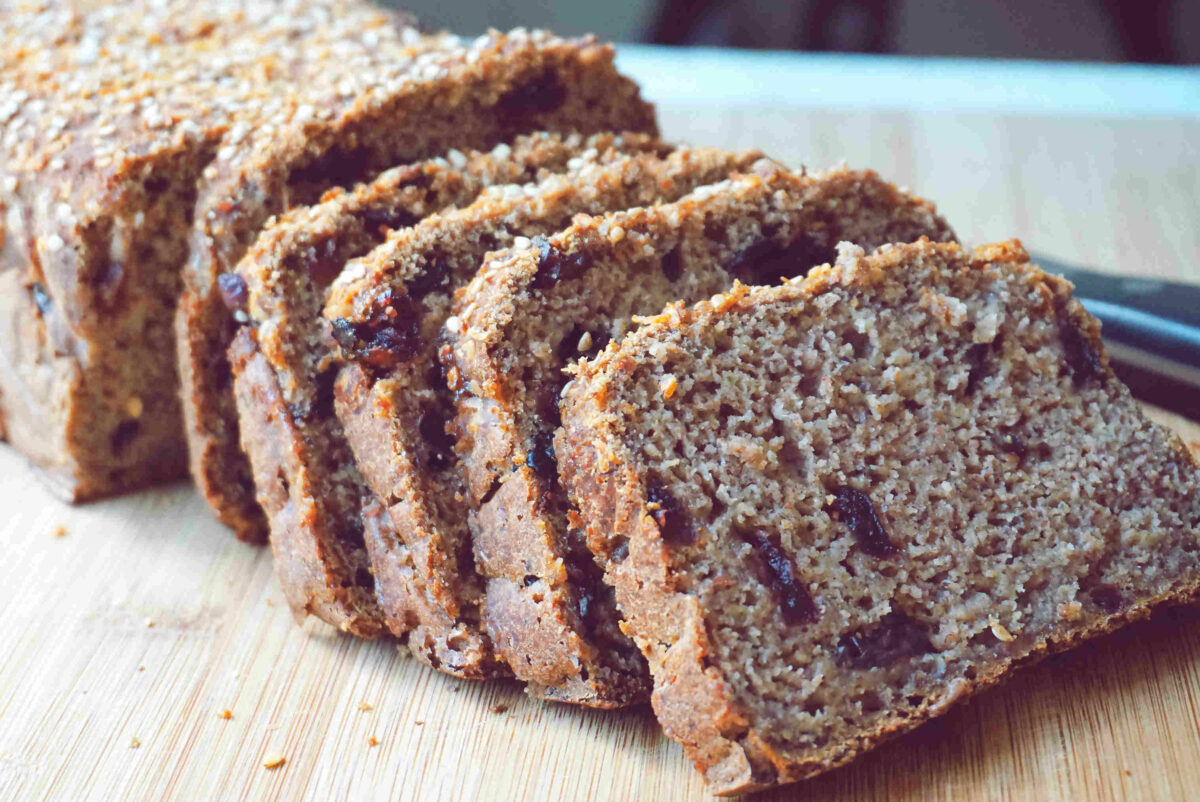
Moist Fluffy Gluten Free Sourdough Banana Bread – Vegan
Extra Recipes Made With Gluten Free Sourdough Starter
- Gluten Free English Muffins (Vegan, Sourdough)
- Soft Gluten Free Wraps / Tortillas (Vegan)
- Gluten Free Sourdough Pancakes – Light & Fluffy
- Gluten Free Sourdough Crackers With Seeds (Vegan)
Baked It? I’d love to hear how it turned out! Tap ⭐⭐⭐⭐⭐ to rate it or leave a quick comment below! your feedback helps other readers (and keeps me creating new treats).
Pin It!
©HealthyTasteOfLife. Content and photographs are copyright protected and need prior permission to use. Copying and/or pasting full recipes to other websites and any social media is strictly prohibited. Sharing and using the link of this recipe is both encouraged and appreciated!
Disclaimer
This article shares general food and baking information only and is not medical advice. Always use gluten-free labeled ingredients if you must striclty avoid gluten; consult your health professional for personal guidance.
24.5K
shares