Contains affiliate links; commissions may be earned.
As an Amazon Associate I earn from qualifying purchases.
Disclosure
Total Time:
5 days d 15 minutes mins
Yields:
50 oz
Recipe
Rate/Comment
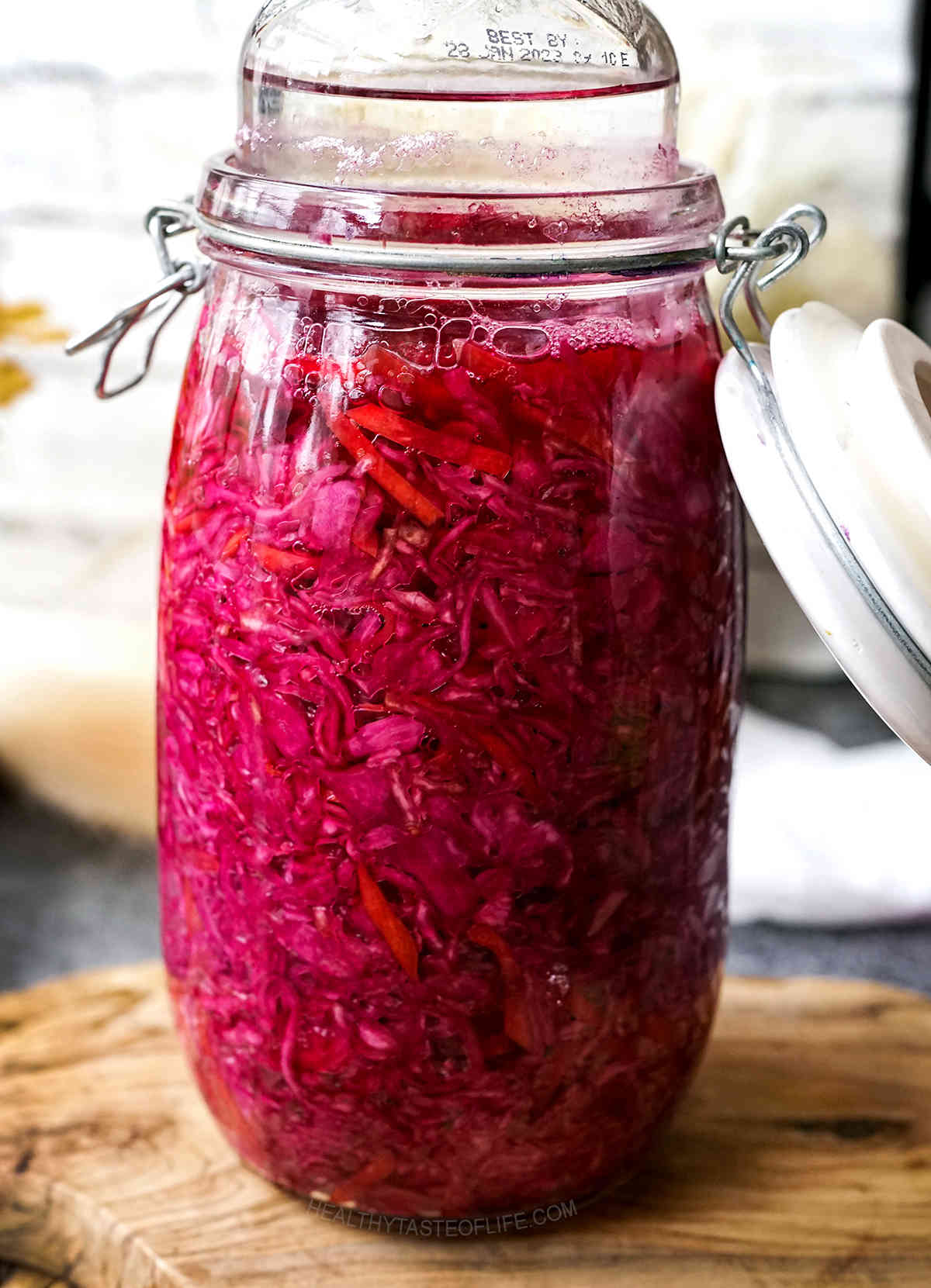
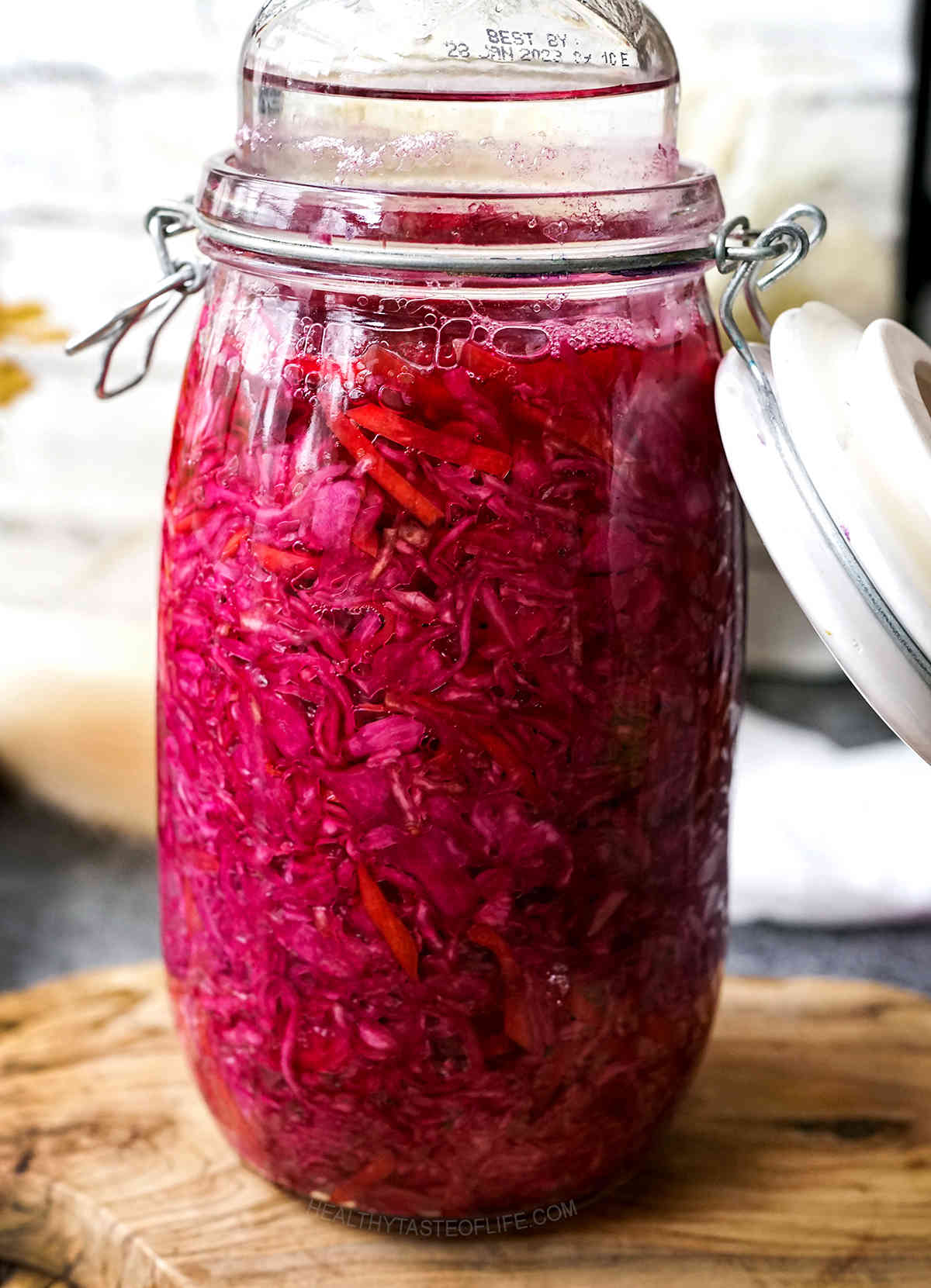
This fermented red cabbage recipe also known as red cabbage sauerkraut is a delicious and easy way to add probiotics to your diet. The result is a tangy, crispy red sauerkraut that can be enjoyed on sandwiches or as a side dish. You can also mix in other vegetables, for added flavor just like I did in this fermented cabbage and beet recipe.
Red cabbage sauerkraut
Enjoy the health benefits of fermented foods with this simple and tasty red cabbage sauerkraut.
Table of Contents
- Fermented Red Cabbage Benefits
- Ingredients Needed
- How To Make Red Cabbage Sauerkraut: Step By Step Instructions
- Red Sauerkraut Serving Suggestions
- Tips For Success
- FAQs
- More Lacto-Fermenting Recipes
- Printable Recipe
- Fermented Red Cabbage (Sauerkraut)
Fermented Red Cabbage Benefits
Fermentation is a natural process that preserves vegetables and creates beneficial probiotics, which can aid digestion and support a healthy gut microbiome. So not only is fermented red cabbage a delicious addition to your meals, it also brings important health benefits by pre-digesting the veggies and making them more bioavailable for you, hence delivering a good dose of vitamins and minerals.
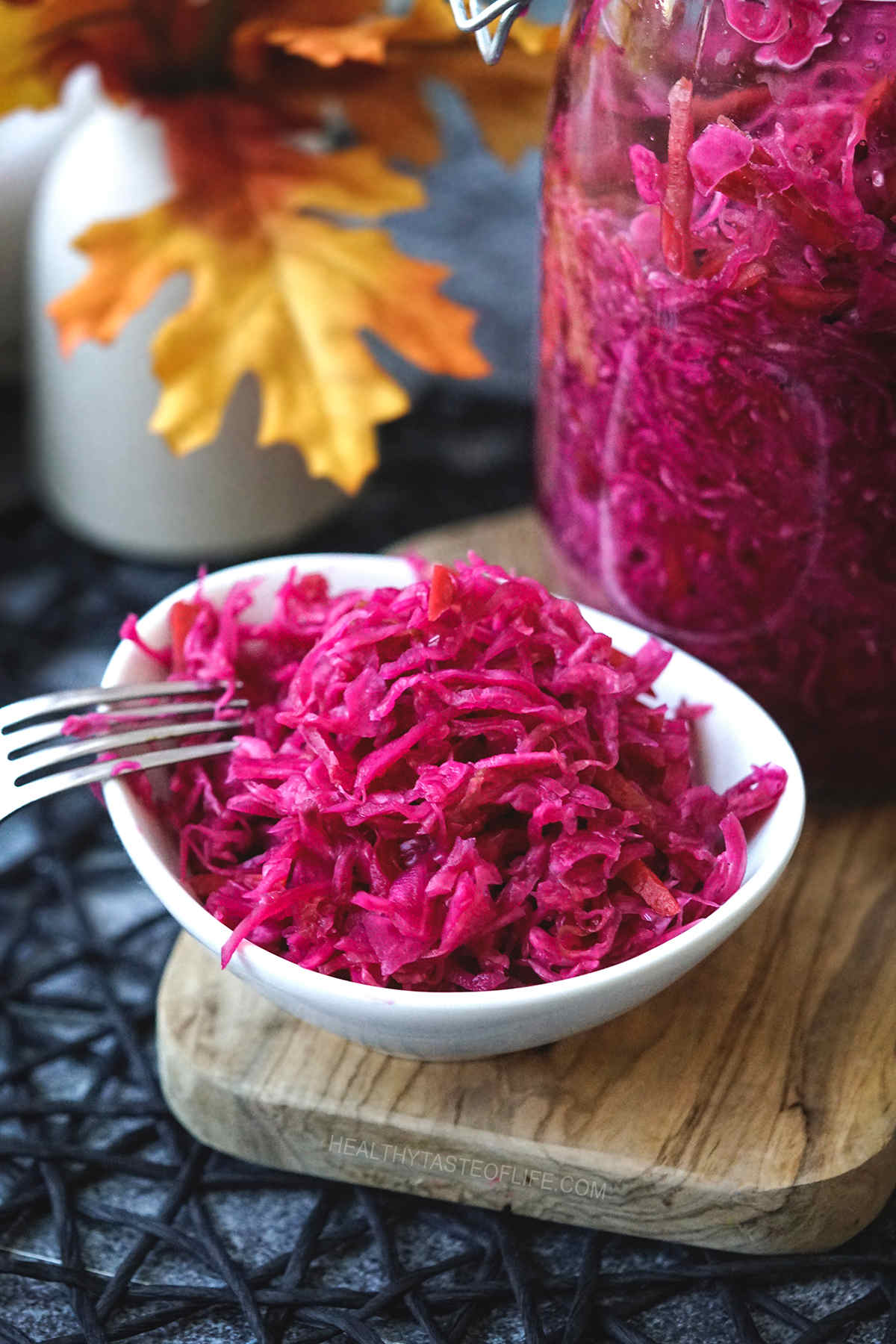
Serve fermented red cabbage in bowl as a side dish.
Ingredients Needed
- Red cabbage (shredded) – or purple cabbage as some people call it;
- Green/white cabbage (shredded)– adding a little green cabbage ensures it cuts off some of the pungency the red cabbage usually has;
- Carrots (julienned)– to add some natural sugar – which will aid fermentation and make it tastier;
- Celtic sea salt – high quality sea salt.
Heads up: some links are affiliated & I may receive a small commission from qualifying sales. For more info see my disclaimer policy.
How To Make Red Cabbage Sauerkraut: Step By Step Instructions
- First, shred the red cabbage, green cabbage, and carrots into thin slices using a mandoline. I shredded as much cabbage as it filled a 4-Quart bowl, half with red cabbage and half with green cabbage. About 22.22 ounces (630 grams) each. And then I julienned 2 large carrots on top.
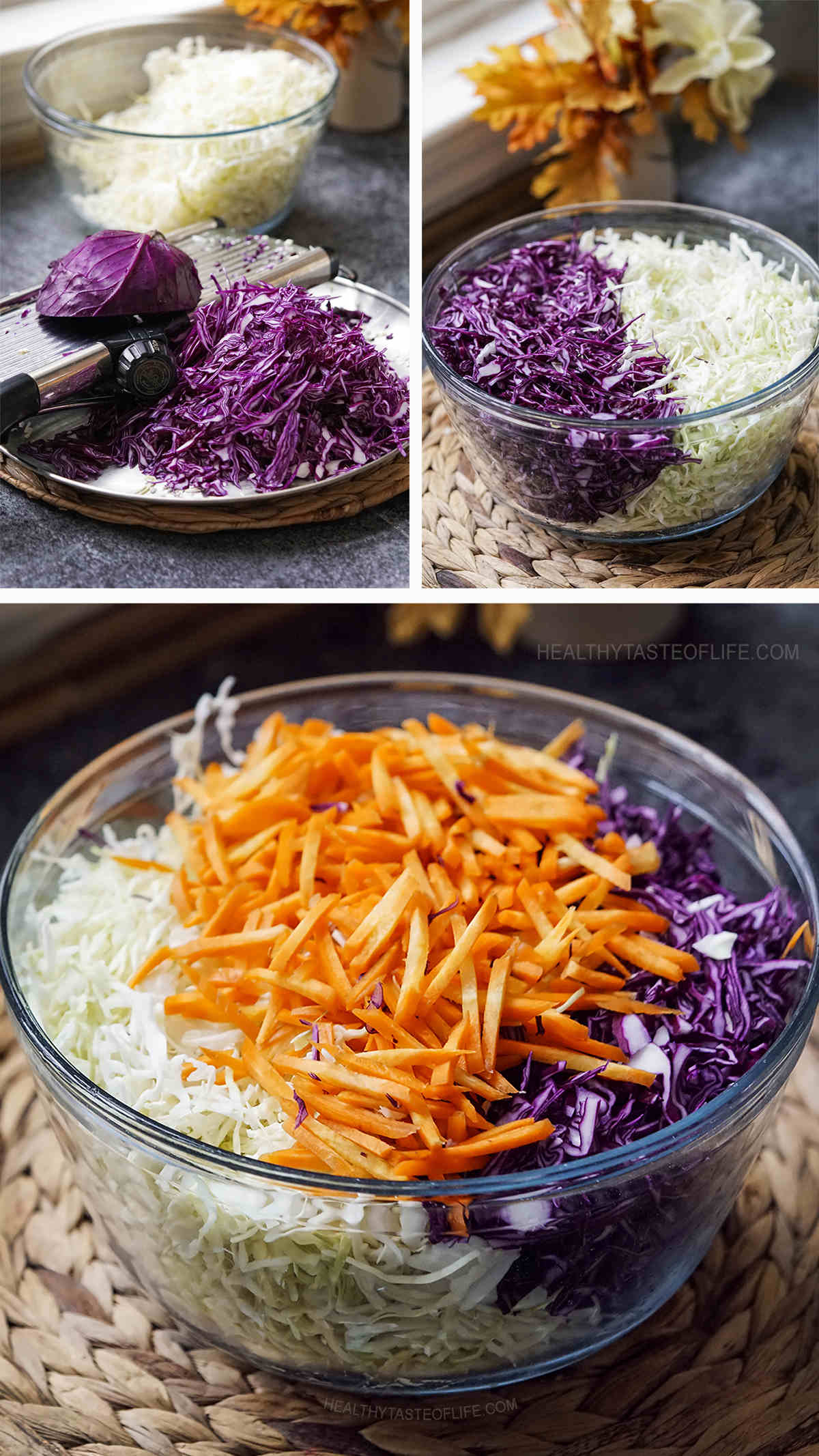
Gather all prepared ingredients in a bowl.
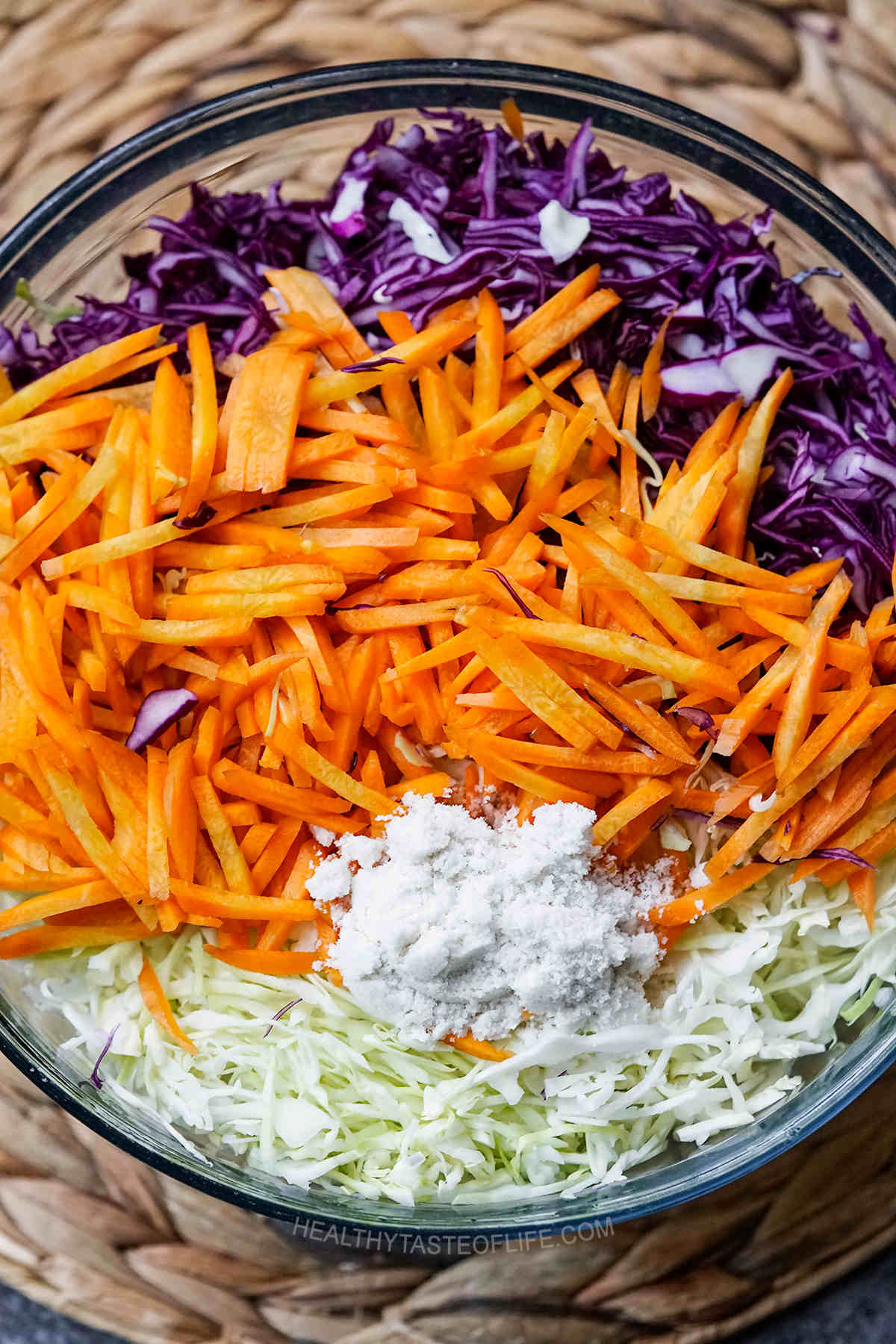
- Next mix the shredded vegetables with salt, massaging them until they release their juices. You’ll want to use a really nice, coarse, unprocessed good quality salt, like this Celtic Sea Salt. The golden ratio for fermenting veggies is 1.5 teaspoon of salt per pound (lb) or (~500g) of vegetables.
- Then I transferred everything In a larger bowl (with plenty of space to get my hands in and mix it around).
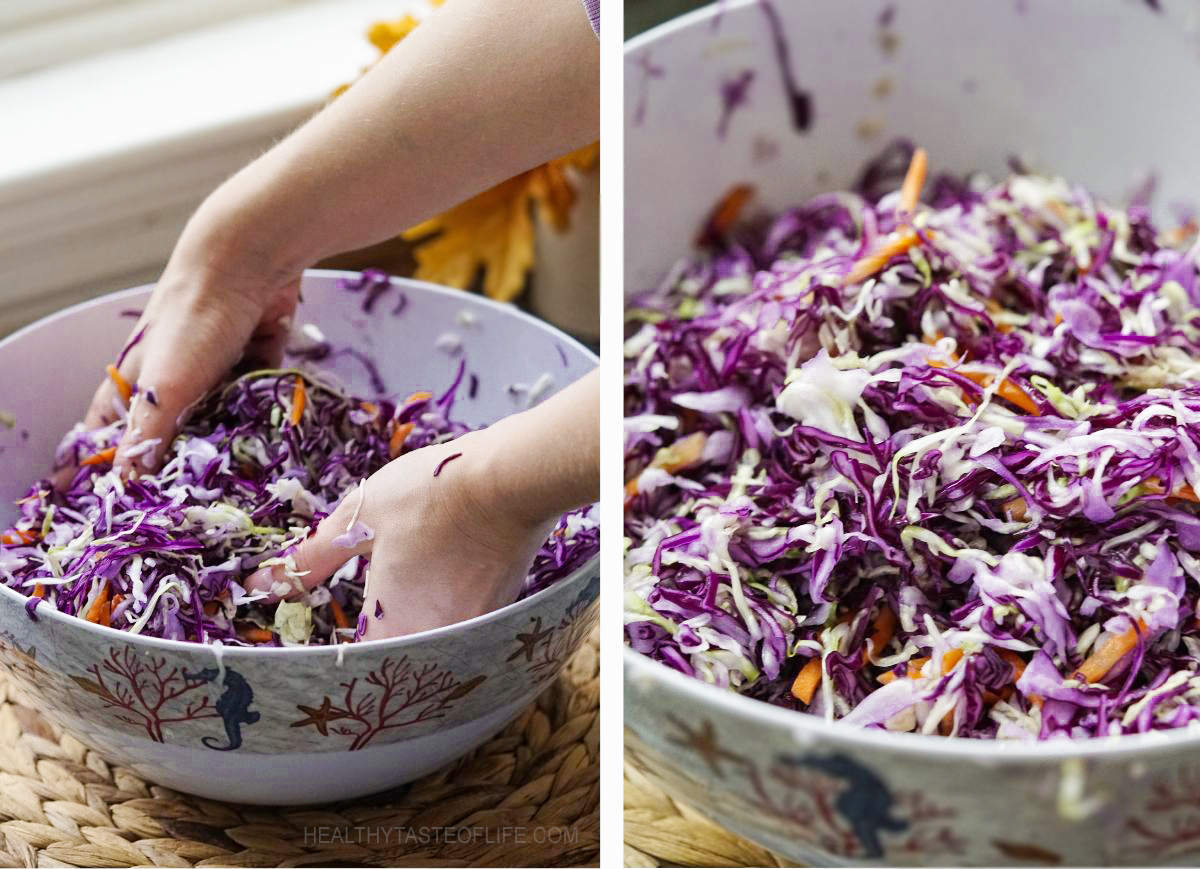
- After massaging let the mixture sit for 10 minutes to give it time to break down more and release more juices.
- Transfer the mixture into a jar or crock, pressing down firmly to remove any air pockets it should submerge in its own juice. Leave about 1½ inches of space from the top of the jar.
- You can use a fermentation kit but if you are willing to improvise like I do, just use a regular 50 oz glass jar with a locking clamp.
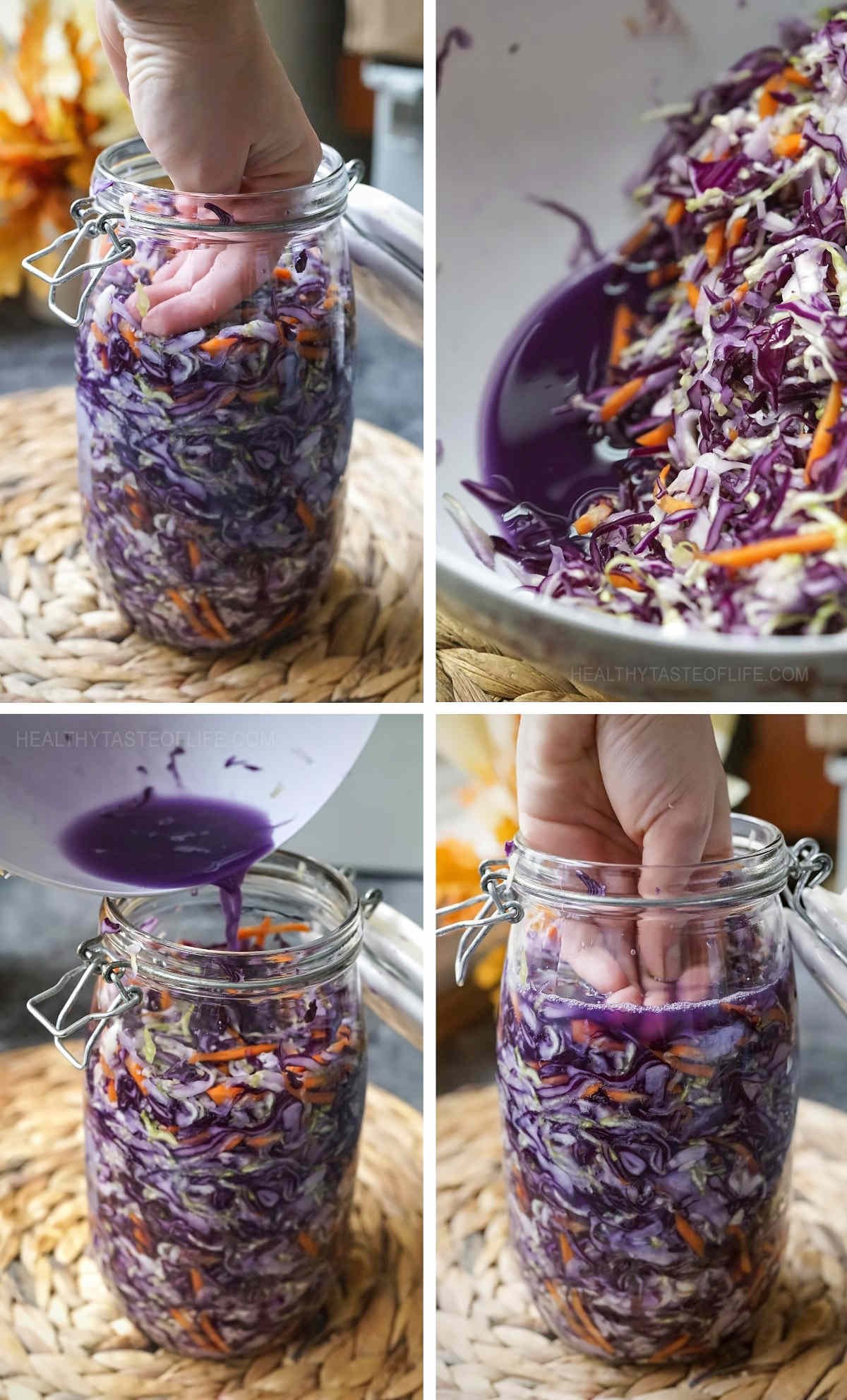
When you press tightly the cabbage in the jar all the juice will rise up and you don’t need to add water at all.
- Cover the top of the cabbage mixture with a weight to keep it submerged under its juices. You can use these weights or improvise with something like a small heavy glass jar filled with water like I did. Keeping the red cabbage kraut in an anaerobic environment (submerged in the liquid) during the fermentation period is the key to prevent spoilage of the upper layer.
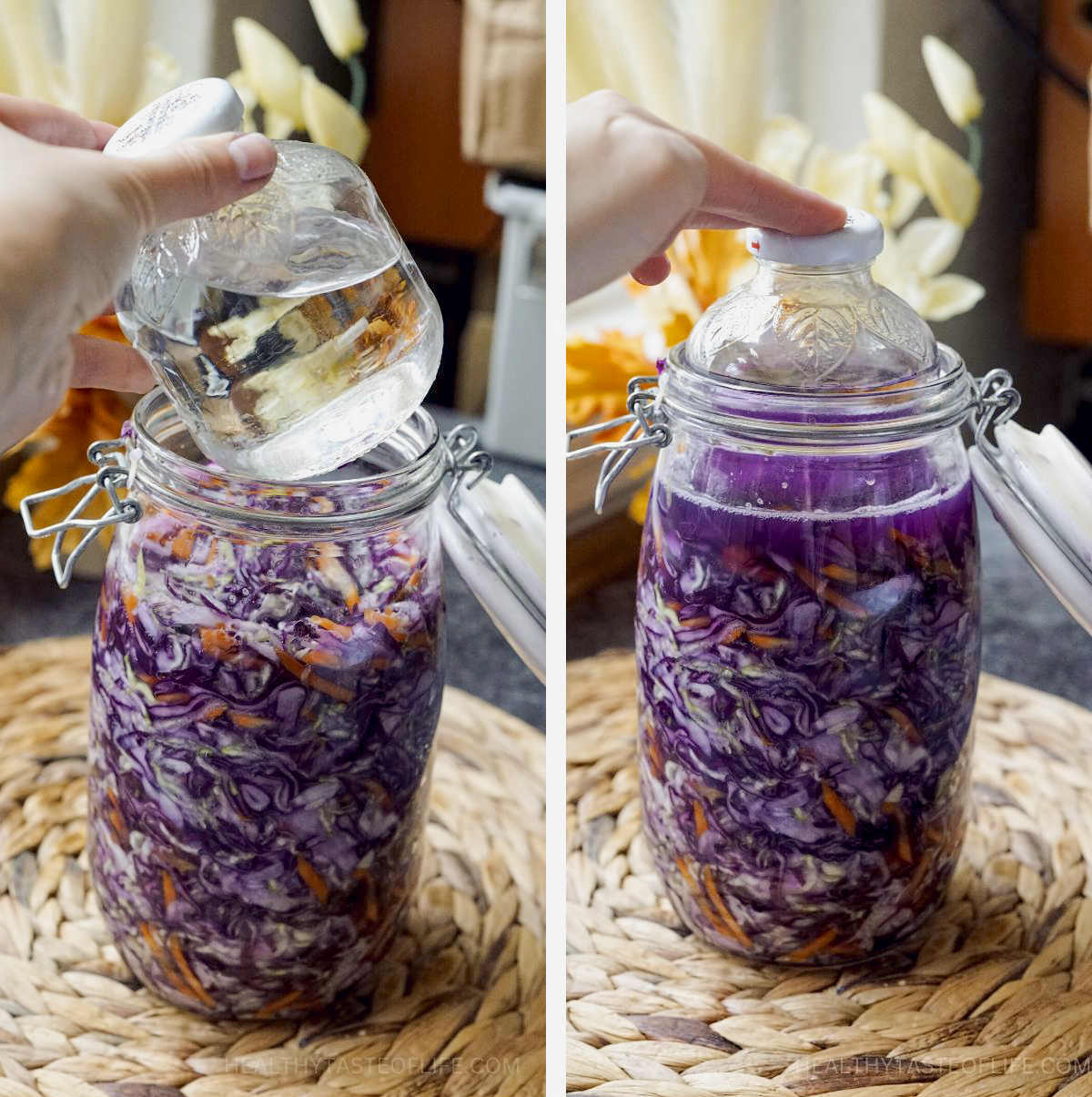
A small jar filled with water will serve as weight and will keep everything submerged in the cabbage juice.
- Cover the top of the jar with a coffee filter secured with a rubber band, this will prevent contamination with other bacteria and will give the red cabbage sauerkraut enough oxygen to keep fermenting.
- Allow the red cabbage mixture to ferment for up to 1 week or so at room temperature (65-70°F is preferred). The number of days for fermenting will depend on the room temperature.
- When the red cabbage and carrot starts to ferment, usually the second or third day, small bubbles will rise to the top and maybe some scum may form, that’s totally normal.
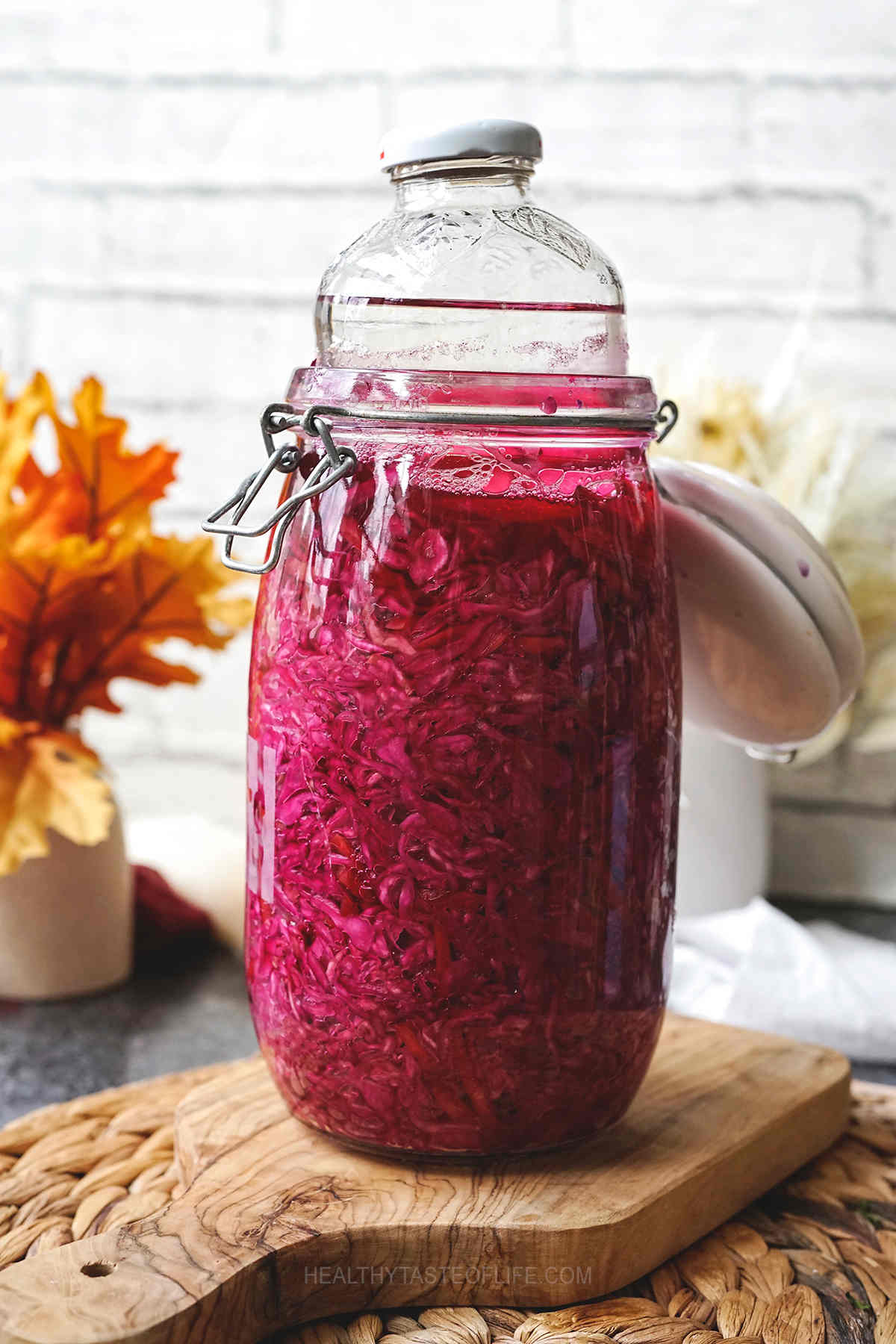
Red cabbage sauerkraut after 3 days of fermenting (releasing bubbles) – it changes the color from purple to dark red.
- Once fermented to your liking (somewhere between 4 and 7 days), transfer the red sauerkraut in the refrigerator to slow down the fermentation process. You remove the weights and close the lid when storing.
- You can start eating after 10 days or so. The longer it stays out the more sour it becomes, so this is a matter of personal taste.
- Once refrigerated, the red cabbage kraut will keep for up to a year.
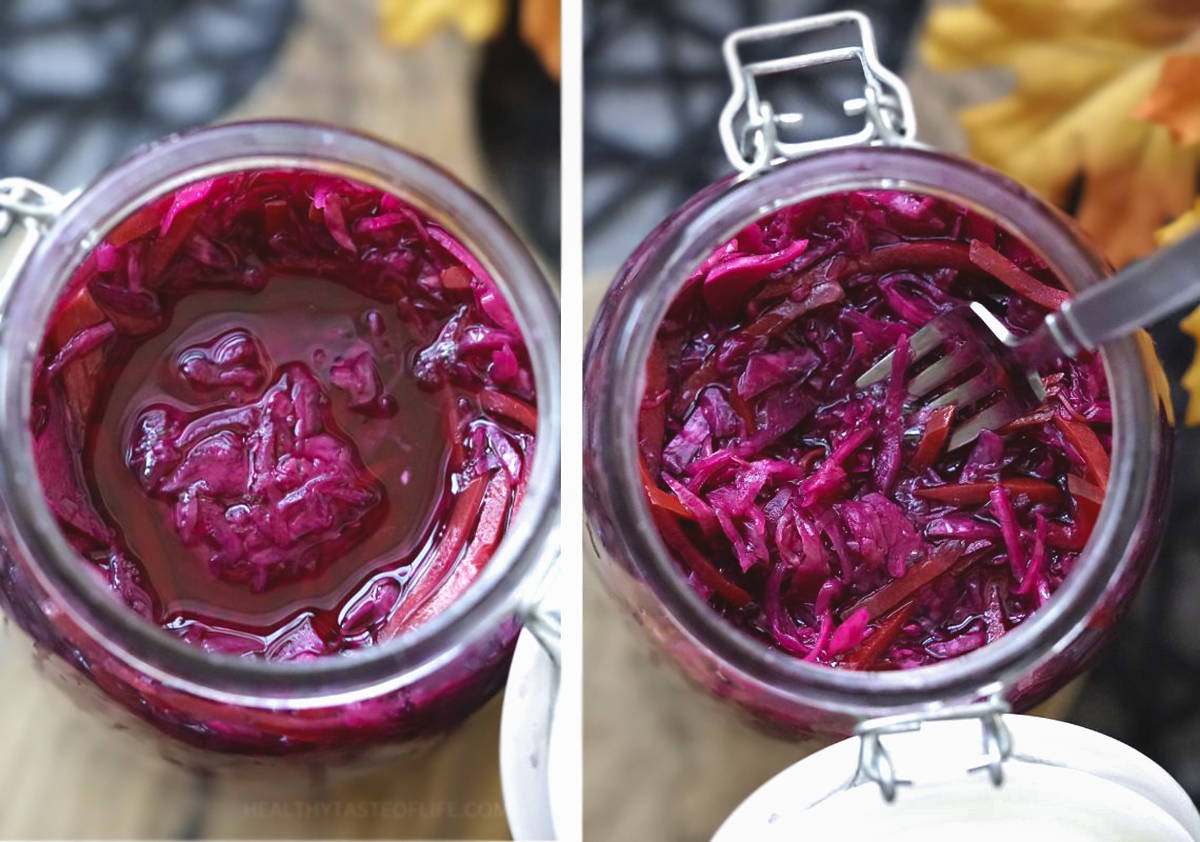
After you remove the weight, the juice will subside a bit. That’s ok, just close the lid and refrigerate.
Red Sauerkraut Serving Suggestions
Serve as a delicious and crunchy topping for sandwiches or salads, or as a side dish to your favorite meals.
- Toss into a green salad, or use a little bit in a cabbage carrot salad.
- As a topping in a poke bowl;
- Use in a tortilla, on a burger bun, or any wrap sandwich;
- As a soup ingredient for tanginess like this red cabbage soup.
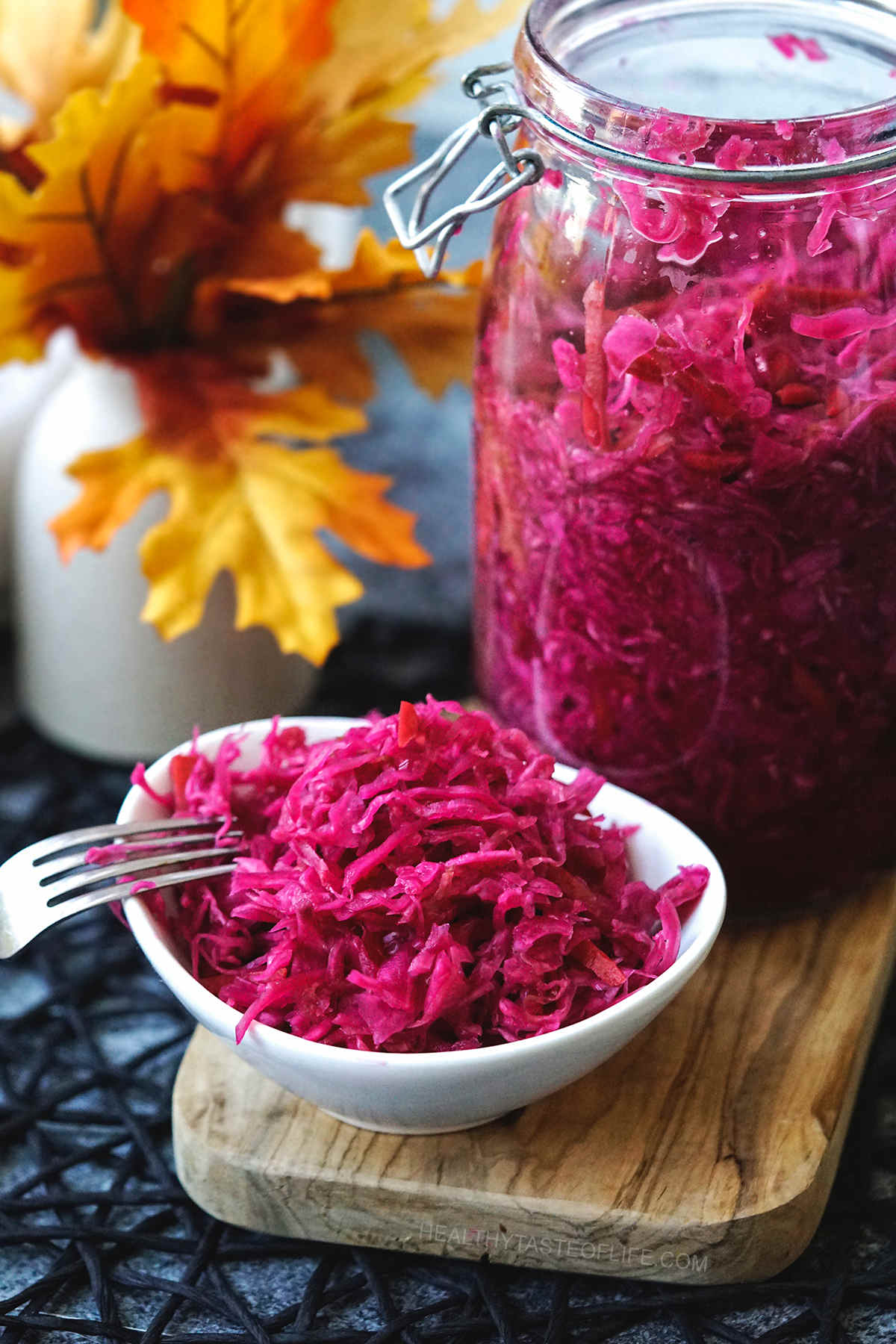
Fully fermented red cabbage ready to eat.
Related: Lazy Cabbage Roll Casserole
Tips For Success
- Always use clean utensils, equipment and jars to prevent contamination. And if your fermented red cabbage kraut smells bad or looks discolored, discard it and start over.
- Sometimes if the upper level is not entirely submerged in liquid it will start to spoil and get a brown color. To fix this, just remove that discolored layer and keep the rest submerged in the liquid until you transfer the lacto-fermented red cabbage in the fridge.
And if you feel adventurous you should definitely try these other fermented veggie recipes:
- Fermented red cabbage and beet recipe
- Fermented shaved carrot salad
- Fermented Cauliflower
- Fermented Tomatoes Guide
- Fermented Watermelon Recipe (Vs Pickling)
- Fermented Fresh Fish (Mackerel) Recipe
FAQs
Can I use other vegetables in this fermented red cabbage recipe?
Yes, feel free to mix in shredded carrots, onions or even apples for a different flavor.
Can I use only red cabbage?
Yes, you can definitely use only red cabbage or only green cabbage without carrots. But I found the taste to be more pleasant in this combination.
Can I use table salt instead of coarse salt for fermenting red cabbage?
I recommend using a good quality, unprocessed salt like Celtic Sea Salt as it contains naturally occurring minerals and has a better taste. Table salt is less healthy and might not yield great results.
Can fermented red cabbage kraut be canned for longer storage?
I do not recommend canning fermented vegetables as high temperatures can kill the beneficial bacteria. It is best to keep fermented red cabbage in the refrigerator.
More Lacto-Fermenting Recipes
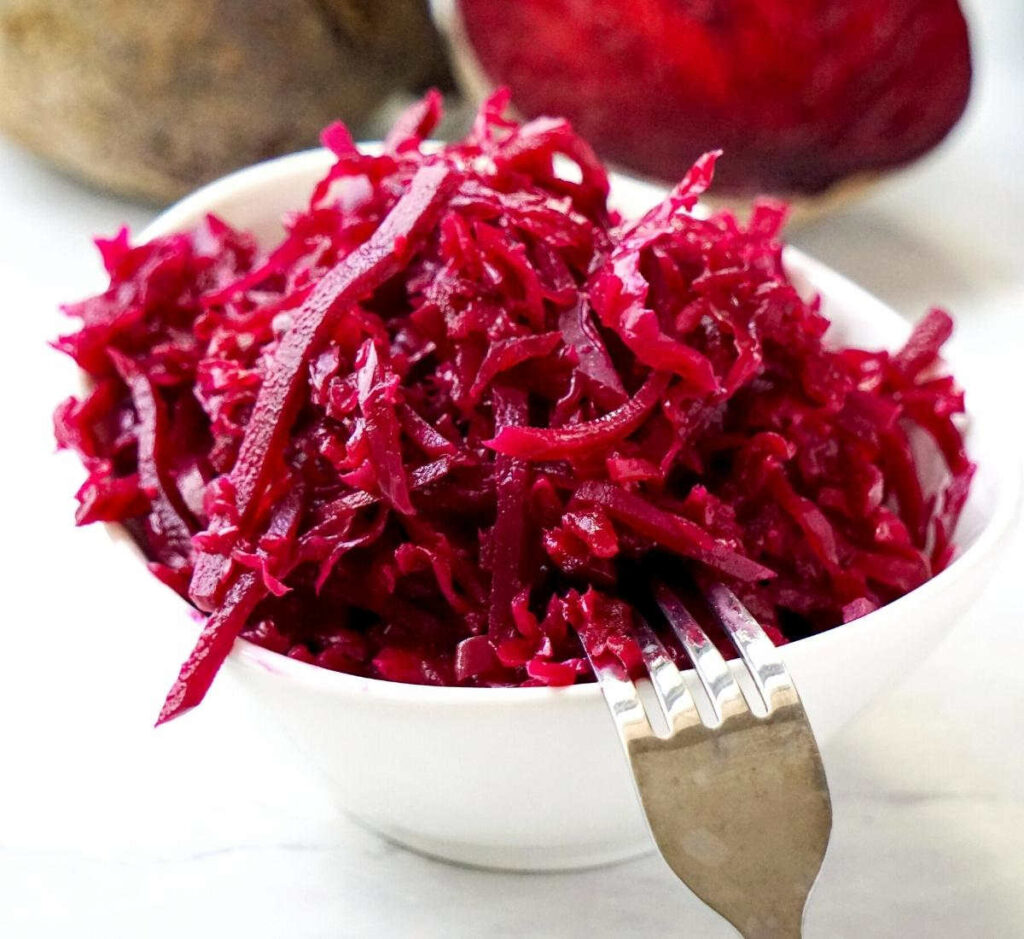
Fermented Beets + Cabbage (Probiotic Rich Beetroot Sauerkraut)
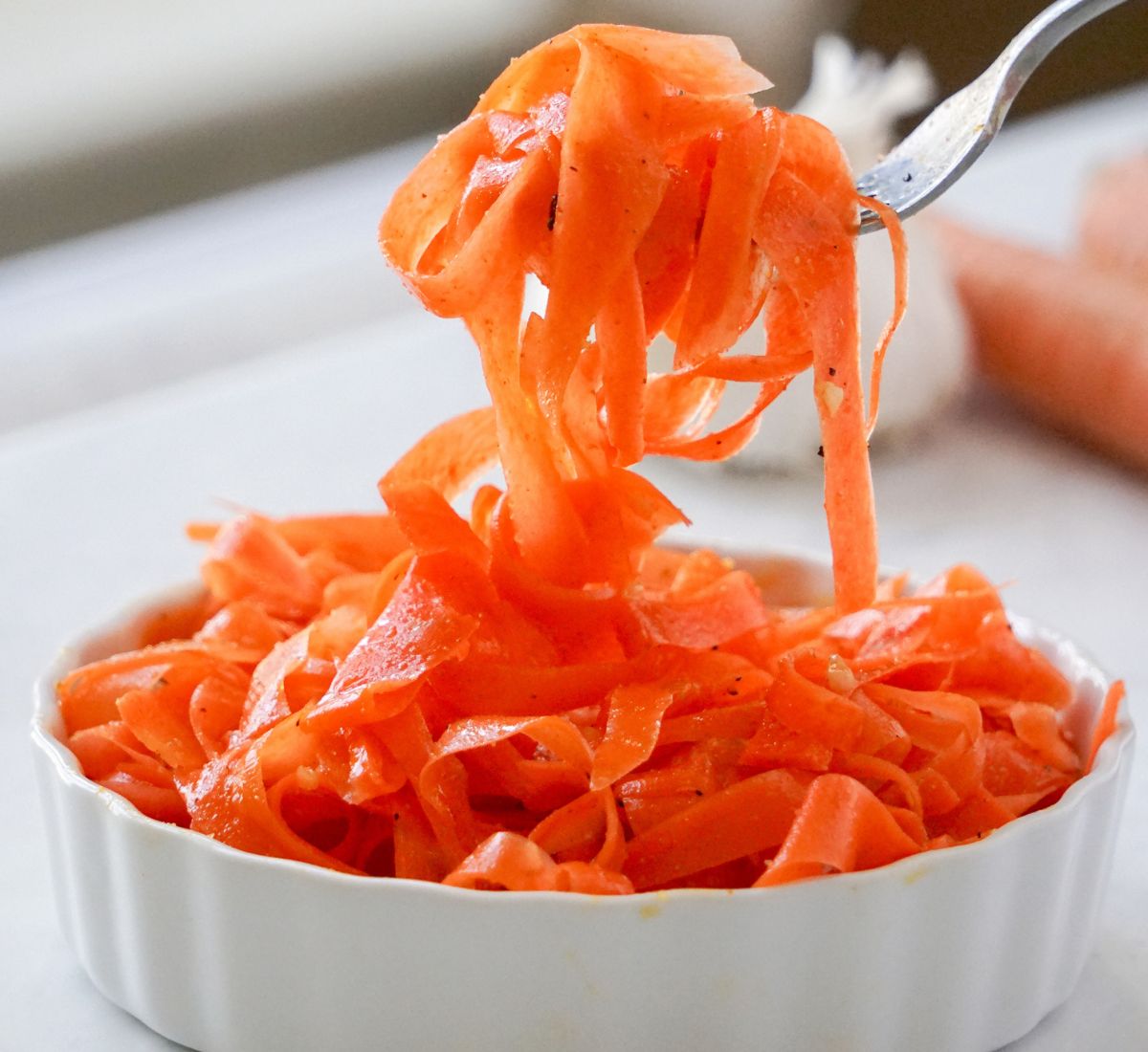
Fermented Shaved Carrot Salad
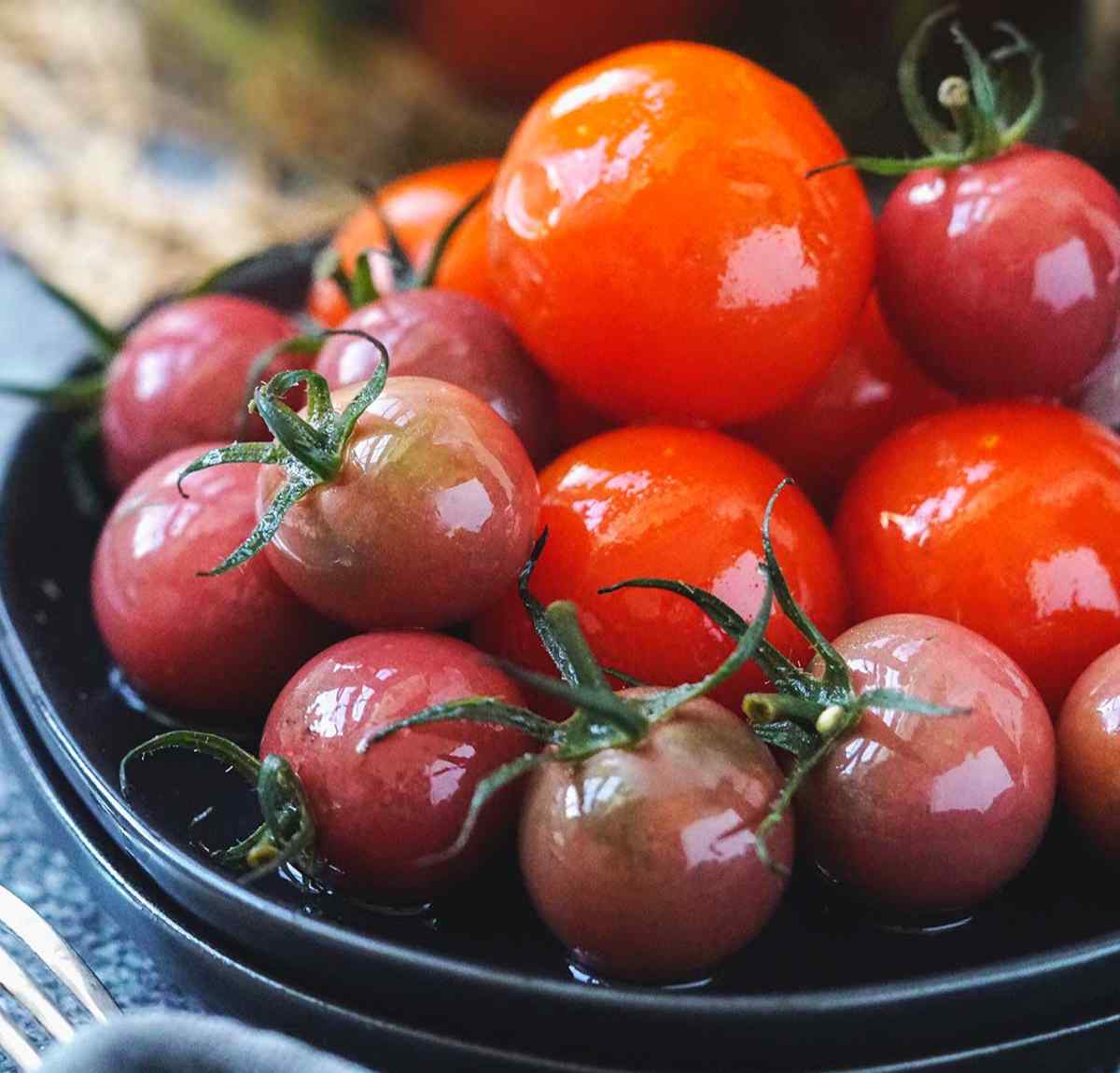
Fermented Tomatoes Guide: A Healthy Way To Preserve Tomatoes
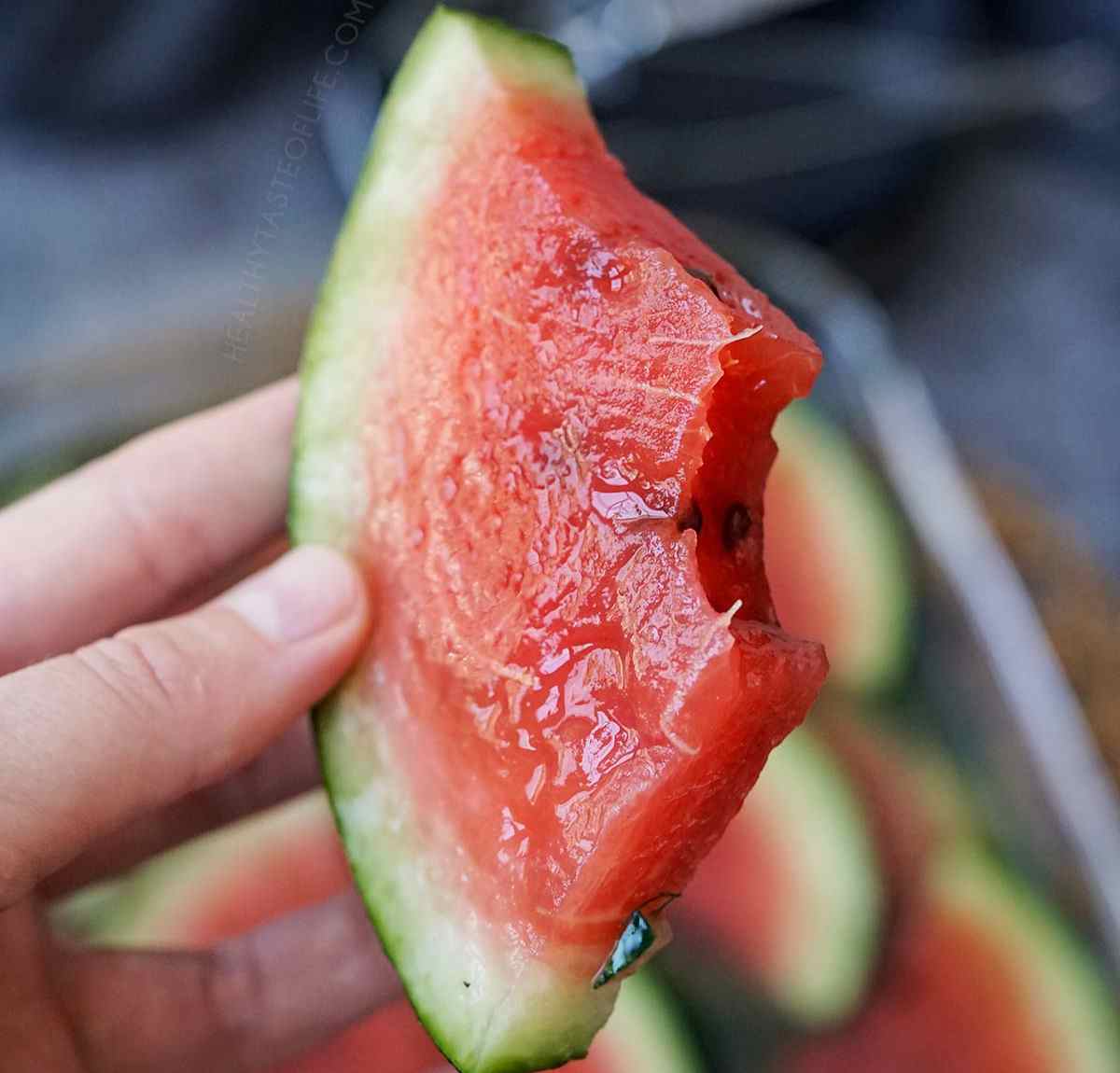
Fermented Watermelon Recipe (Vs Pickling)
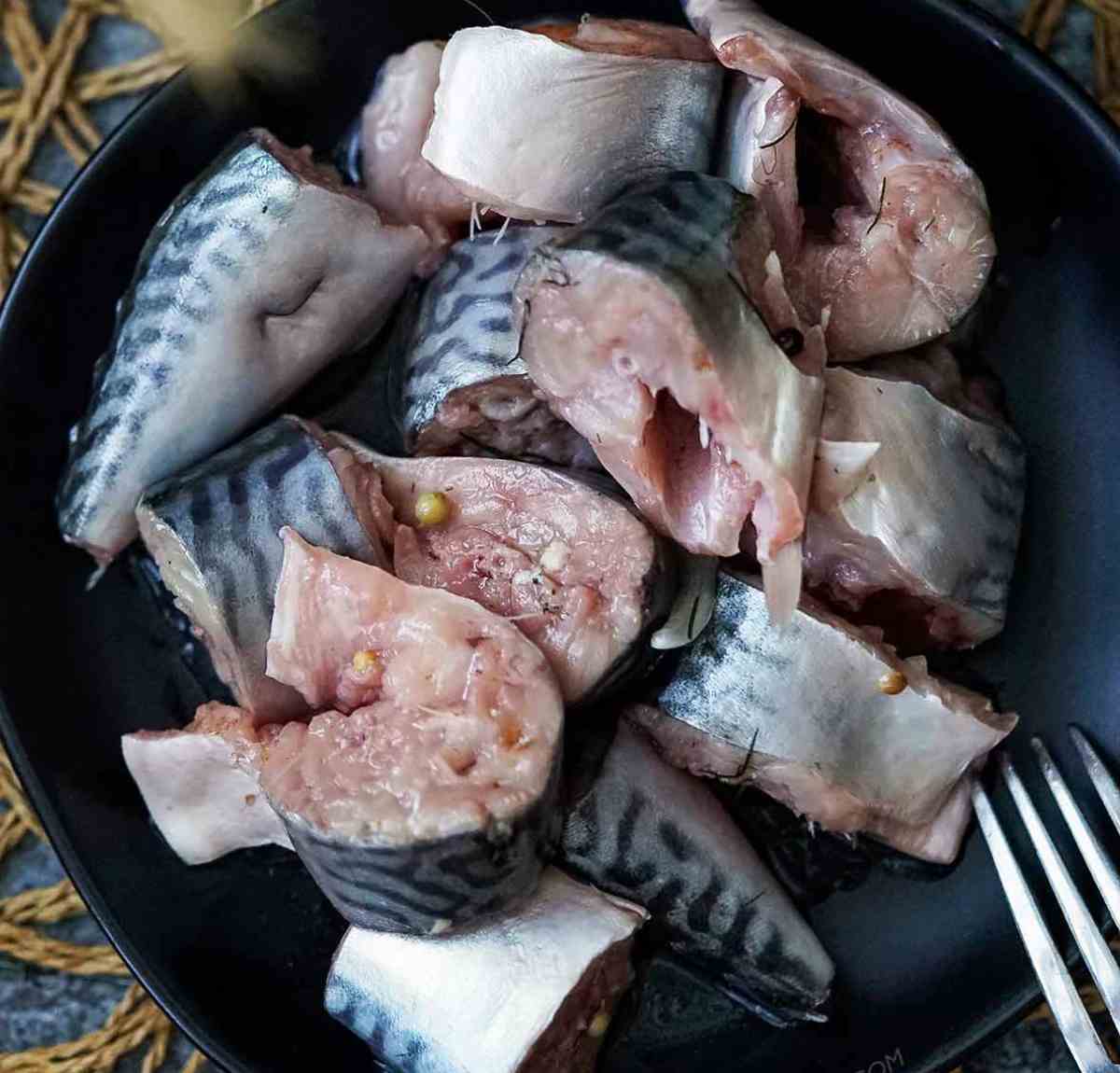
Fermented Fresh Fish (Mackerel) Recipe
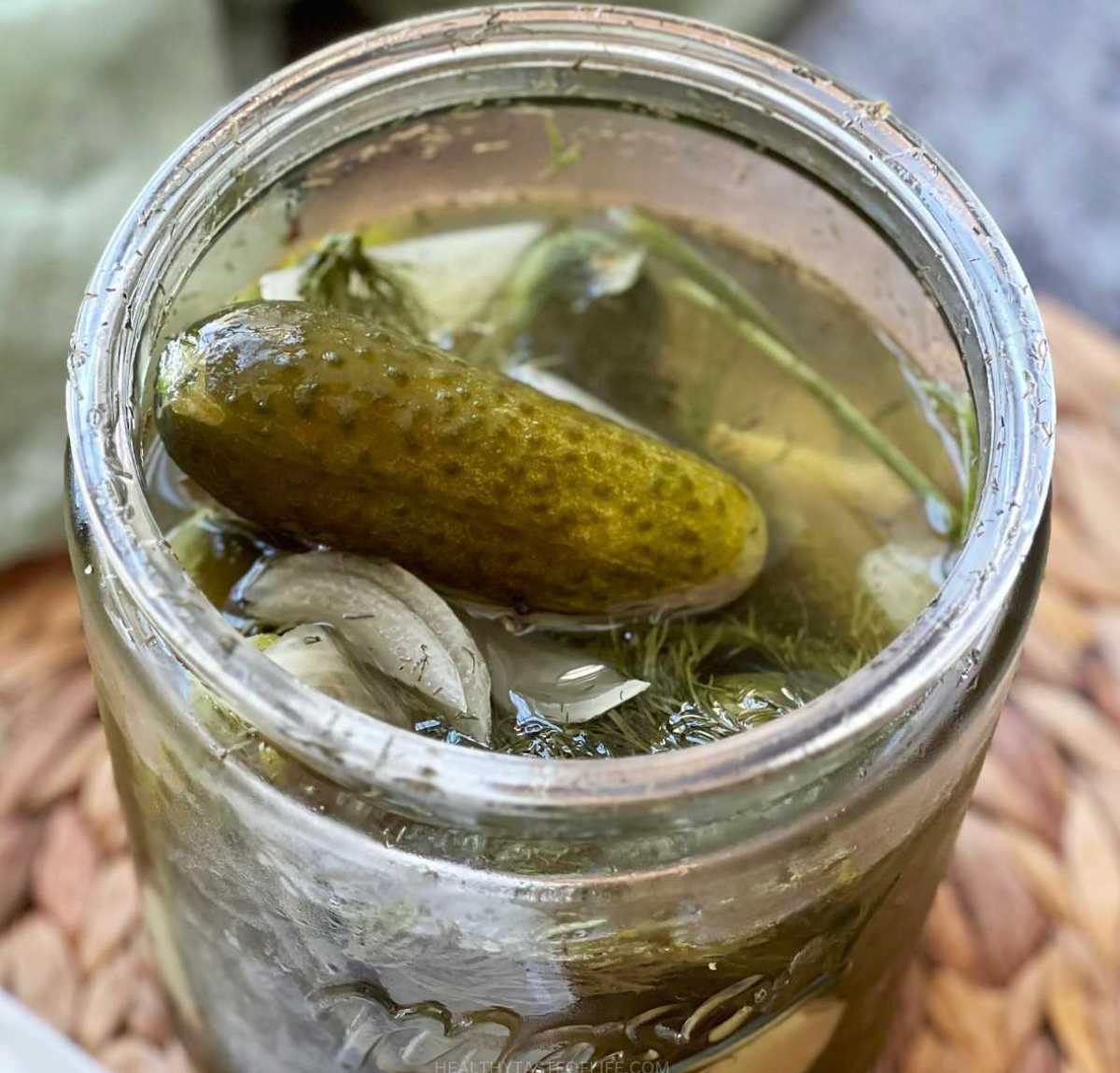
Fermented Cucumbers Recipe (Dill Pickles) No Vinegar
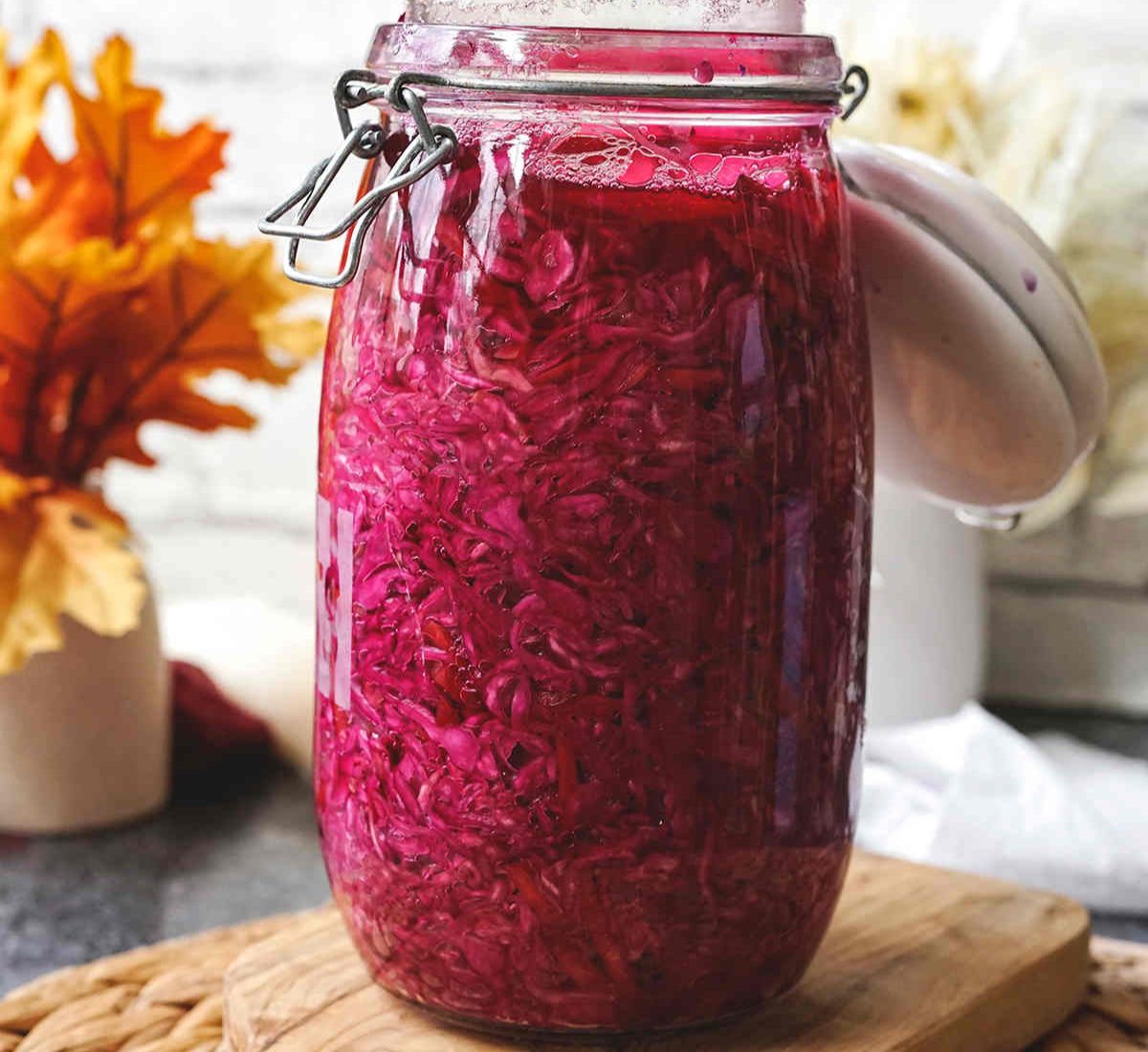
Fermented Red Cabbage (Sauerkraut)
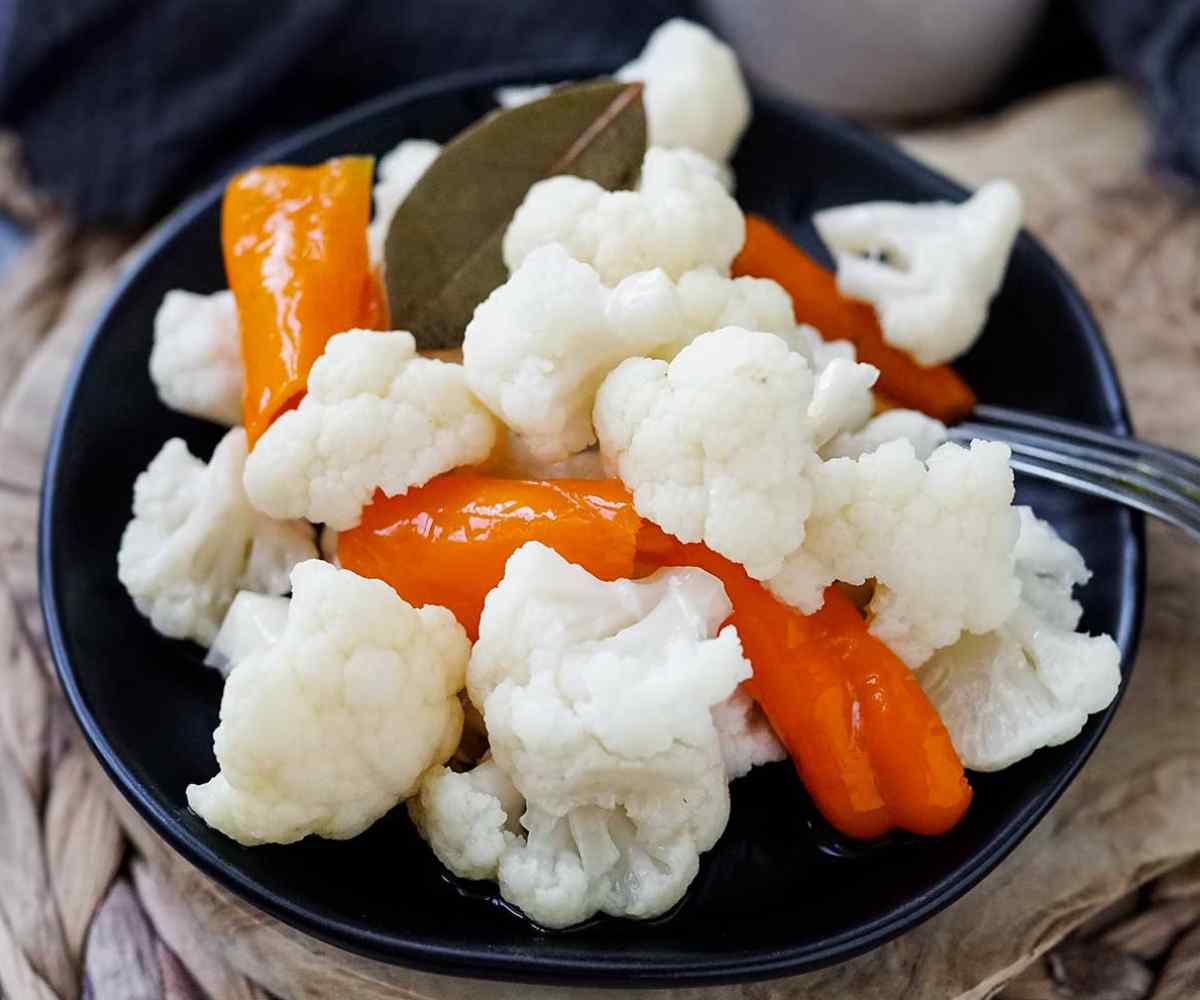
Lacto-Fermented Cauliflower: Tangy Flavorful and Probiotic Rich
Arrow to emphasize the text below
Printable Recipe
Fermented Red Cabbage (Sauerkraut)
A tangy, crispy fermented red cabbage aka sauerkraut – easy to make at home with no special equipment. The green cabbage and carrot is added to improve the taste but you can make it exclusively with red cabbage. The recipe make about 50 oz of lacto-fermented red sauerkraut.
Cook Mode
Prevent your screen from going dark
Prep Time
15 minutes mins
Fermenting Time
5 days d
Total Time
5 days d 15 minutes mins
Course:
miscellaneous, Side Dish
Cuisine:
Clean Eating, Paleo, Sugar Free, Vegan, whole30
Servings:
50 oz
Calories:
69kcal
Author:
Olga Caz
Pin Recipe
Save Saved!
Ingredients 1x 2x 3x
- 1 small red cabbage head shredded – about 22.22 ounces (630g)
- 1 small green/white cabbage shredded – about 22.22 ounces (630g)
- 2 large carrots – julienned (~250g)
- 1.66 tbsp Celtic sea salt – 1.5 tablespoon + 0.5 teaspoon
Instructions
- First peel the cabbage layers that look damaged and give the surface a good rinse. Tap dry.
- Shred the red cabbage, green cabbage and carrots into thin slices using a mandoline.
- I shredded as much cabbage as it filled a 4-Quart bowl, half with red cabbage and half with green cabbage. About 22.22 ounces (630 grams) each. Approximately 1260 grams (2.77 lb) total
- And then I julienned 2 large carrots on top (~ 250g).
- Then I transferred everything In a larger bowl (with plenty of space to get my hands in and mix it around).
- Next mix the shredded vegetables with salt (unprocessed good quality salt, like this Celtic sea salt) massaging them until they release their juices.
- The golden ratio for fermenting is 1.5 teaspoon of salt per pound (lb) or (~500g) of vegetables. So I used 1.5 tablespoons + 1/2 teaspoon of salt. You don’t really have to be exact.
- After massaging let the mixture sit for 10 minutes to give it time to break down more and release more juices.
- Transfer the mixture into a jar or crock, pressing down firmly to remove any air pockets. It should submerge in its own juice. Leave about 1½ inches of space from the top of the jar, the liquid will rise and fill that space after a while.
- You can use a fermentation kit but if you are willing to improvise like I do, just use a 50 oz glass jar with a lid.
- Cover the top of the mixture with a weight to keep it submerged under its juices, and cover the jar with a cloth to allow for air flow and prevent the dust. You can use these weights or improvise with something like a small heavy glass jar filled with water like I did.
- Allow the mixture to ferment for up to 1 week or so at room temperature (65-70°F is preferred). The number of days for fermenting will depend on the room temperature.
- When the red cabbage and carrot starts to ferment, usually the second or third day, small bubbles will rise to the top and maybe some scum may form, that’s totally normal.
- Once fermented to your liking, transfer the red sauerkraut in the refrigerator to slow the fermentation process.
- You can start eating after 10 days or so. The longer it stays out the more sour it becomes, so this is a matter of personal taste.
What You Need


Notes
- This recipe makes about 6.5 cups of fermented red cabbage (sauerkraut).
- Once refrigerated, the red cabbage kraut will keep for up to a year.
Tried this recipe?Mention @HealthyTasteOfLife or tag #healthytasteoflife!
Nutrition
Serving: 1cup
|
Calories: 69kcal
|
Vitamin A: 5864.3IU
|
Vitamin C: 111.3mg
|
Calcium: 95.5mg
|
Iron: 1.66mg
The information shown is an estimate provided by an online nutrition calculator.

©HealthyTasteOfLife. Content and photographs are copyright protected and need prior permission to use. Copying and/or pasting full recipes to other websites and any social media is strictly prohibited. Sharing and using the link of this recipe is both encouraged and appreciated!

Gluten Free Dairy Free Cookbook
284 pages total: 128 gluten free & dairy free wholesome recipes with high quality photos (including paleo, whole30 and vegan recipes: no refined sugar or highly processed foods.
1.7K
shares