
Contains affiliate links; commissions may be earned.
As an Amazon Associate I earn from qualifying purchases.
Disclosure
Total Time:
3 hours hrs 50 minutes mins
Yields:
4 Laminated Logs
Recipe
Video
Rate/Comment
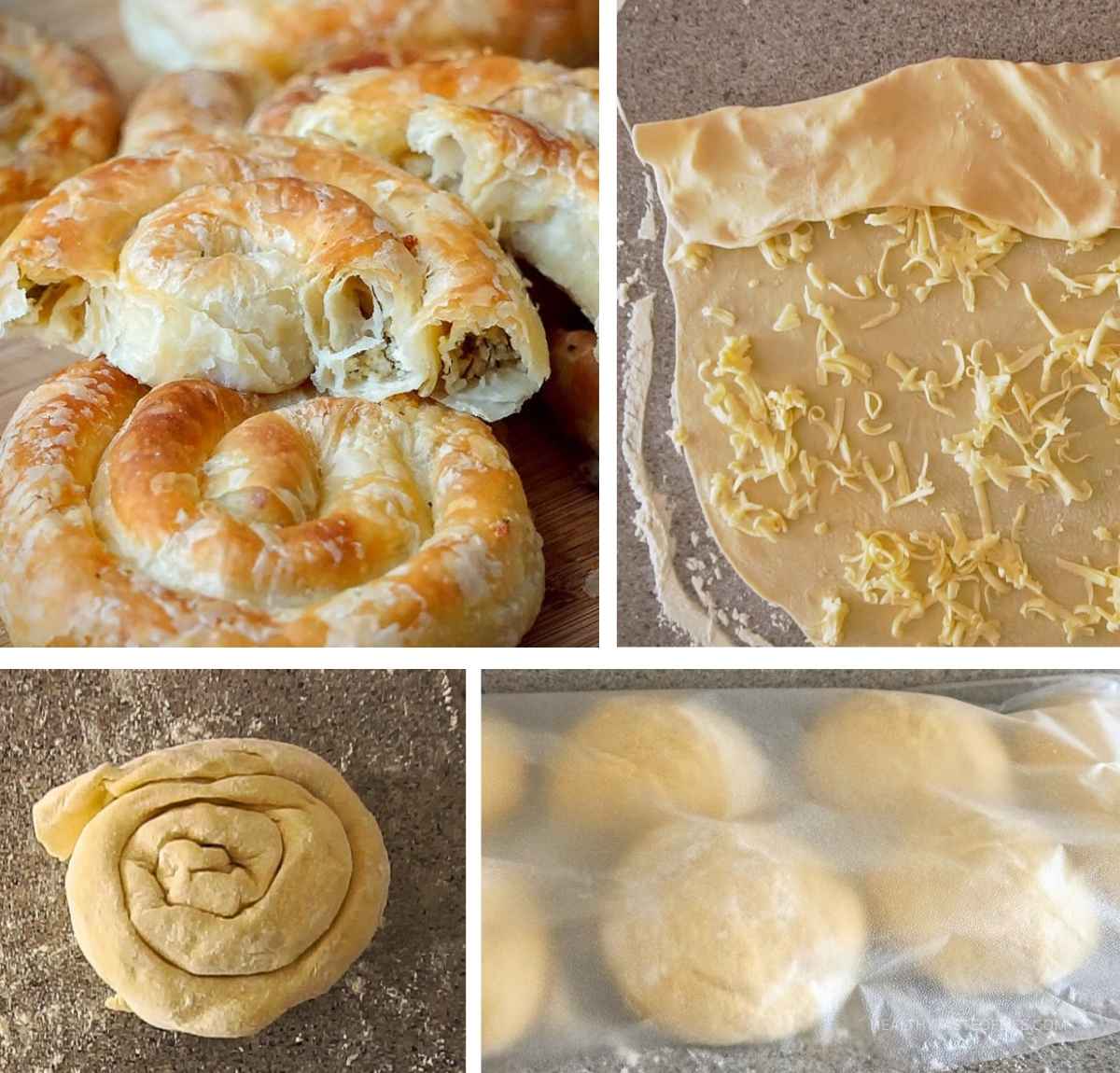
This healthy puff pastry is my family’s go-to for holidays, birthdays, and any time a crowd walks through the door. It’s the rough-puff style I learned from my mom, easy folds, no butter block, tender flaky result, and a batch big enough to actually feed people. It’s also cost-effective compared with store sheets (the fancy French ones with real butter can run about $10 per sheet, often enough for just one serving). Below I’ll show you the grated butter method and folds, the chill times, how to freeze, make-ahead tips and a few filling ideas.
From the same dough: Savory Cheese Puff Pastry Pinwheels (Spirals) · Apple Puff Pastry Turnovers (Light Puff) · Jump to recipe ↓
Jump To ⬇
- A Short Story From My Kitchen
- Note on Fats I’ve Tested
- What Makes This Version “Healthier”
- Ingredients For This Healthy Puff Pastry Recipe
- Flour Tests I Tried (So You Don’t Have To)
- Healthy Puff Pastry (Lightened-Up Rough Puff) From Scratch
- Video: Watch How To Make Healthy Homemade Puff Pastry Dough (Rough Pastry)
- Step-by-Step: Easy Rough-Puff Pastry Dough (No Butter Block)
- Tip: Easy Ways to Shape This Dough
- Filling Ideas (Sweet & Savory) for This Dough
- Storage & Freezing
- FAQs
- More Recipes For Your Festive Table
A Short Story From My Kitchen
This is the recipe my mom still makes for every special occasion. People always ask for it. It’s the plate that empties first. She started making it back in the late ’80s–’90s, and as little kids we loved the smell in the house. That’s how we knew that we’ll have guests soon. Back then budgets were tight, margarine was cheaper, so she used that, and the pastry still puffed and looked great. Later she switched to using real butter (I prefer grass-fed, cultured butter with a simple ingredient list). The flavor is much better, though the visual puff looks similar. Use what fits your family and values.
This healthy puff pastry dough (with grated butter method) can be used in so many recipes, it can be rolled, stuffed, and layered with all kinds of ingredients. The recipe can be used in desserts, lunch and dinner meals, as a snack (in lunch boxes) or appetizers for a crowd.

Note on Fats I’ve Tested
I have not tested coconut oil or other neutral oils in this exact dough, so I can’t say they behave like butter here. If I had to pick a plant-based option to try, I’d start with a higher-quality vegan butter (e.g., Miyoko’s), but consider this untested. I’ve also used apple cider vinegar (not lemon) for this dough.
What Makes This Version “Healthier”
- Cleaner, fewer additives than store-bought (you control the ingredients) no preservatives, emulsifiers, or hydrogenated/palm blends + seed oils that many packaged sheets use. I choose real grass-fed/cultured butter + organic: fewest ingredients).
- We use a rough-puff method (fewer turns, easier folding, less steps), and I keep overall fat reasonable (less) for home baking.
- Portion size and fillings matter, smaller shapes and fruit/veg fillings (with less sugar and additives) keep things lighter.
For reference, compare the ingredients of an expensive (good quality) french puff pastry dough (14 oz) with this cheaper version puff pastry (17.3 oz) – judging by the ingredient list, it has nothing healthy in there, just modified, highly processed components. No wonder why this difference in price! That’s why I make my own.
Real talk: puff pastry is still a pastry. This is a lighter feel, not a medical food. Please see the FAQ for swaps and the short disclaimer at the end.
Ingredients For This Healthy Puff Pastry Recipe
- All-purpose flour (see my tests below; this is what works best); I preffer
- Cold unsalted butter, (or soft, scoopable ghee, not melted);
- Ice-cold water;
- Fine sea salt;
- Apple cider vinegar (for dough tenderness);
See all measurements in the recipe card:
Flour Tests I Tried (So You Don’t Have To)
- Whole wheat flour: darker color (not appealing), low rise, hard texture and not flaky or airy.
- Einkorn AP (Jovial): good flavor (I really wanted it to work), but the dough is fragile, sticky, tears easily, and lacks elasticity: hard to roll and fold (you can make it work with practice, but it’s challenging).
- Gluten-free blends: I don’t recommend for this dough; elasticity is key for folding/layers.
Best result: regular all-purpose flour. This organic soft wheat flour is what I personally use (found it at Whole Foods). If you need a different flour (not wheat based) for dietary reasons, consider alternate recipes that don’t rely on lamination.
Healthy Puff Pastry (Lightened-Up Rough Puff) From Scratch
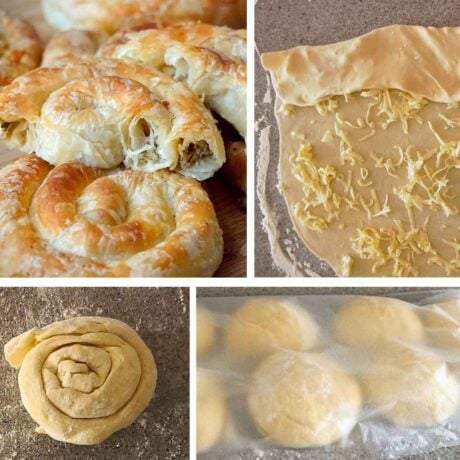
Flaky, party-size puff pastry the way my mom makes it: freeze and grate the butter onto paper-thin sheets, roll into logs, rest cold, then roll/fill/bake. Simple ingredients, big batch – consistent lift without a butter block. This healthy puff pastry dough recipe will yield about 4 laminated logs and each log can make about 4 pieces of filled pastries. Experiment with different fillings, sweet or savory, to make desserts, appetizers, breakfast, brunch and tasty meals for a large group of friends, families and holiday parties.
Cook Mode
Prevent your screen from going dark
Prep Time
1 hour hr 10 minutes mins
Cook Time
40 minutes mins
Inactive Time (Chill)
2 hours hrs
Total Time
3 hours hrs 50 minutes mins
Course:
Appetizer, Dessert, Pastry, Snack
Cuisine:
European Inspired
Servings:
4 Laminated Logs
Calories:
290kcal
Author:
Olga Caz
Pin Recipe
Save Saved!
Ingredients 1x 2x 3x
For The Dough
- 8 oz ( ~ 240 ml) water – room temp
- 2 tbsp (30 ml) apple cider vinegar
- 2 tbsp (27g) unflavored oil, – avocado is my choice
- 2 eggs,
- ⅓ tsp sea salt
- 1¾ cups + 2 tbsp (235g) of all purpose flour – plus 1-2 cups (125–250g) more for kneading/rolling
For Lamination
- 4 sticks (4 oz each) (454 g) butter – unsalted (frozen)
Instructions
Make the base dough
- Freeze the butter: Place whole sticks in the freezer overnight (or at least 3 hours) so they grate cleanly. Another method: let the butter soften just enough to spread by hand, when the dough is rolled out.
- Mix the wet: In a large bowl whisk water, apple cider vinegar, oil, and eggs until smooth.
- Add dry & bring together: Add salt, then gradually add flour, mixing with a spatula until heavy, then switch to hands.
- Knead just until it holds: Turn onto a lightly floured surface and knead until the dough pulls away and feels soft, slightly tacky (not wet). If still very sticky after ~10 minutes, dust with a little flour and continue just until it holds. Do not over-knead.
Portion & cover
- Divide into fist-size pieces; knead each one into a tight, smooth ball. Cover the balls with a plastic wrap or towel while working to prevent drying.
Roll ultra-thin sheets & laminate with grated butter
- Working with one ball at a time on a lightly floured surface (and floured rolling pin), roll as thin as possible (paper thin). Across all pieces you may use about 1–2 cups extra flour total to prevent sticking.
- Grate frozen butter: Using the coarse side of a grater, cover the sheet with a light, even layer of grated frozen butter. Or if you have soft butter (not too soft, just enough to make it spreadable), smudge a thin layer all over the sheet, when the dough is rolled out.
- Roll into a log: Roll the butter-topped sheet into a tight log (quick lamination). Place in a sealed bag.
- Rest cold: Refrigerate logs at least 2 hours (overnight is best) to firm butter and set layers. Keep it cold until you’re ready to fill it and bake.
Final roll, fill & shape
- Prep surface: Lightly oil the table. You’ll need about 1 tbsp of oil per sheet. Keep remaining logs chilled while you work. Take one chilled log; roll into a thin rectangle; the dough should stretch easily.
- Spread filling: Add a thin, even layer of filling over (see choices in the post) about ¼–⅓ of the rectangle (the end you’ll start rolling from).
- Gently grab the dough and roll it up into a tight spiral, or fold it over (apple turnovers). Seal edges well. See video.
- Lift up the rolled dough, seam side down, and place it diagonally onto a cold sheet pan. Brush with egg wash if desired.
Bake
- Preheat fully: Heat oven to 390°F / 200°C. Start with a cold baking sheet so layers stay defined.
- Bake 30–40 minutes until puffed and evenly golden. If butter pools, blot lightly with paper towel and continue. Cool: Rest a few minutes on the pan, then move to a rack to finish crisping.
Video
In the video I’m making a double batch. If the video is not showing, you might need to disable your ad-blocker in your browser.
Notes
Why it’s lighter: paper-thin sheets + more wraps = lift without a heavy butter block; portion sizes and thinner shapes help too.
Make-ahead & storage:
Chill/freeze logs: Keep laminated logs 3or 4 days in the fridge or up to 2 months in the freezer. Thaw overnight in the fridge before rolling and shaping. Keep dough cold during shaping for best lift.
If you freeze the puff pastry dough, thaw it overnight in the refrigerator and be sure it’s pliable before working with it.
When left at room temperature the butter in the dough will soften and melt. This leaves the dough sticky and really hard to work with.
Temperature (keep it simple)
- Hot oven = better lift. Aim for 390–400°F. A higher temperature helps the pastry rise higher.
- Preheat fully. Heat the oven for about 20 minutes to reach 390°F before baking. If it isn’t hot enough, the butter melts instead of turning to steam; and steam is what creates lift.
- Keep the dough cold. Work quickly and chill as needed. If the butter warms, you’ll lose lamination (layers) and see butter leaking during baking.
Pastry nutrition varies by filling and portion, this is just an aproximation.
Tried this recipe?Mention @HealthyTasteOfLife or tag #healthytasteoflife!
Nutrition
Serving: 1plain pastry
|
Calories: 290kcal
|
Carbohydrates: 15.6g
|
Fat: 24.6g
The information shown is an estimate provided by an online nutrition calculator.
Video: Watch How To Make Healthy Homemade Puff Pastry Dough (Rough Pastry)
Watch fold thickness, dough feel, and bake color. Includes timing and simple shaping tips. In the video I’m making a double batch.
If you can’t see the video, try to disable the ad-blocker in your browser.
Step-by-Step: Easy Rough-Puff Pastry Dough (No Butter Block)
1) Make the rough dough:
The three primary ingredients of pastry are flour + water + fat.
- Freeze the butter in advance. Place whole sticks in the freezer overnight (or at least 3 hours) so they grate cleanly.
- When making the dough, first combine the wet ingredients: water apple cider vinegar, oil, and eggs, whisk until smooth.
- Then add dry: add salt, then gradually add flour, mixing with a spatula until heavy, then switch to hands.
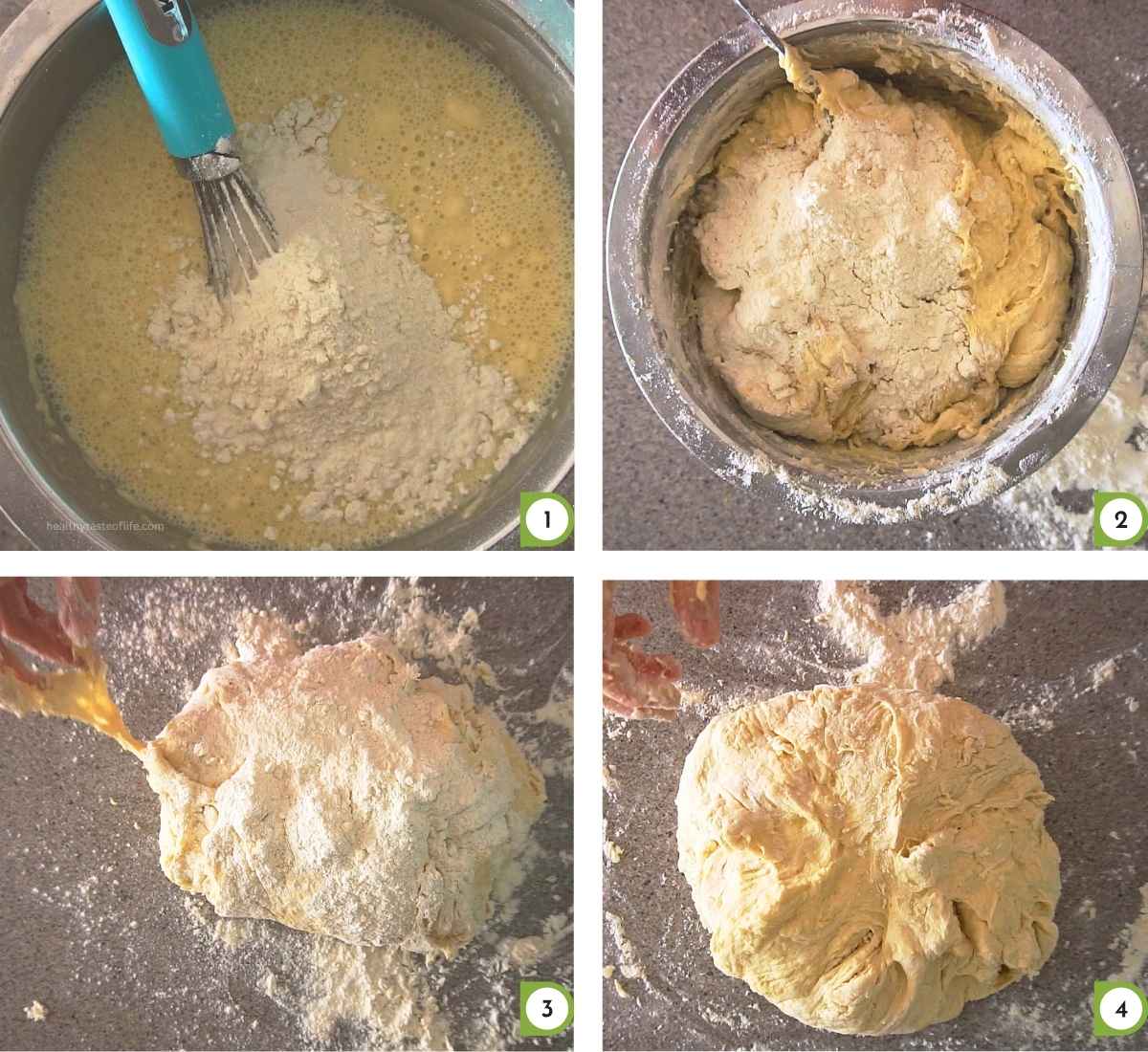
Combining wet ingredient with dry ingredients for making a rough puff pastry dough.
1.1. Knead just to come together:
Turn onto a lightly floured surface and knead until the dough pulls away from the bowl and feels soft, slightly tacky, not wet. If it’s still very sticky after ~10 minutes, dust with a little flour and continue just until it holds. Don’t over-knead.
1.2. Portion:
Cut into fist-size pieces; shape each into a tight, smooth ball. Keep covered with plastic wrap or a towel so they don’t dry out. Let them rest for 10 minutes or so.
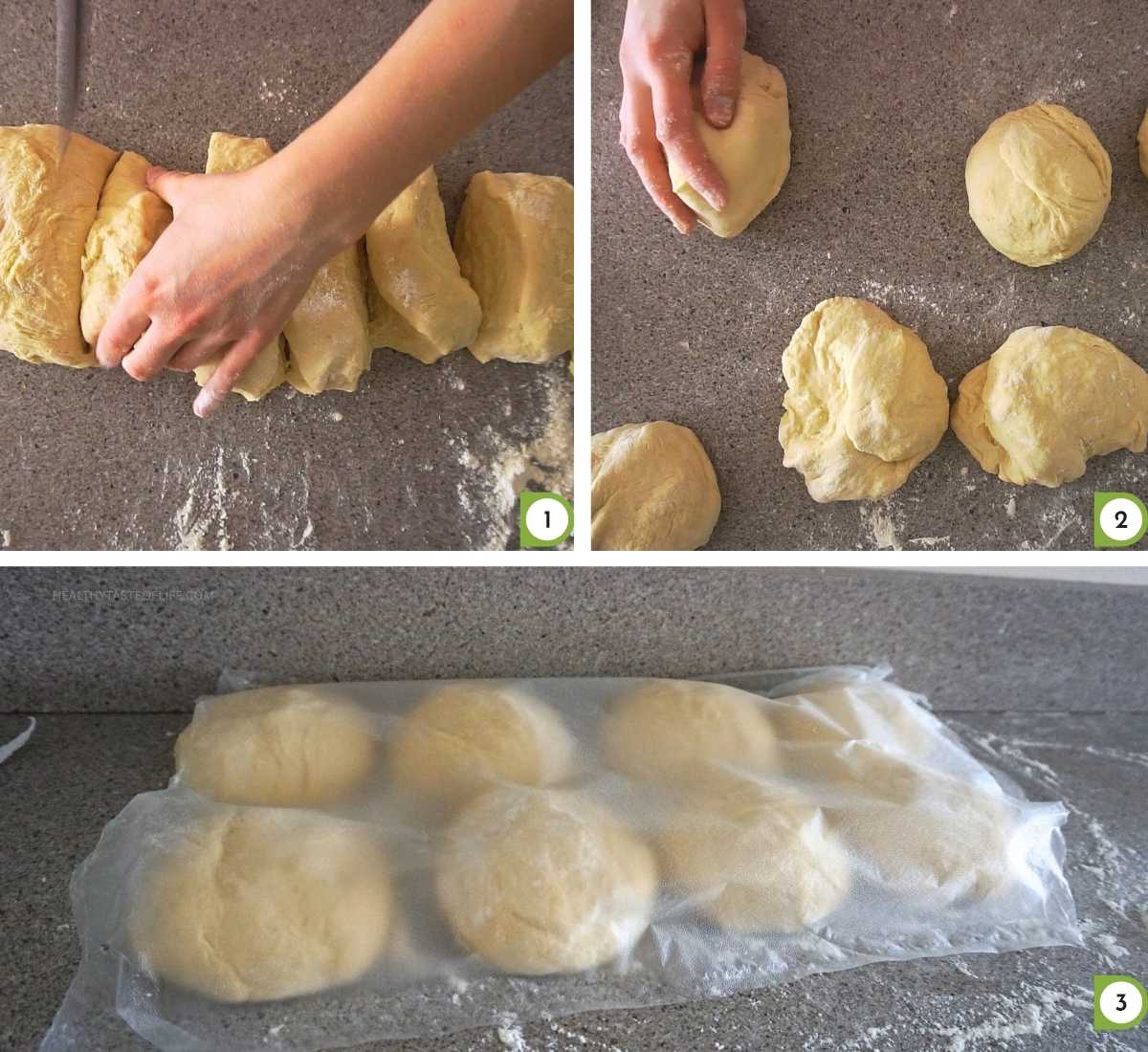
Portioning the dough and resting.
2) Roll paper-thin sheets & laminate with grated butter:
There are a few ways to shorten the process of making homemade puff pastry dough, my version consists of rolling the dough first.
- Roll thin: Working with one ball at a time on a lightly floured surface (and a floured rolling pin), roll as thin as possible (paper thin). You’ll use about 1–2 cups extra flour across all pieces to prevent sticking.
- Grate butter onto sheet: Using the frozen butter, grate a light, even layer over the entire dough sheet.
- Roll up each sheet: Roll the butter-topped sheet up into a tight log (this is your quick lamination). Place each rolled log in a sealed bag (use ziploc or reusable gallon freezer bags).
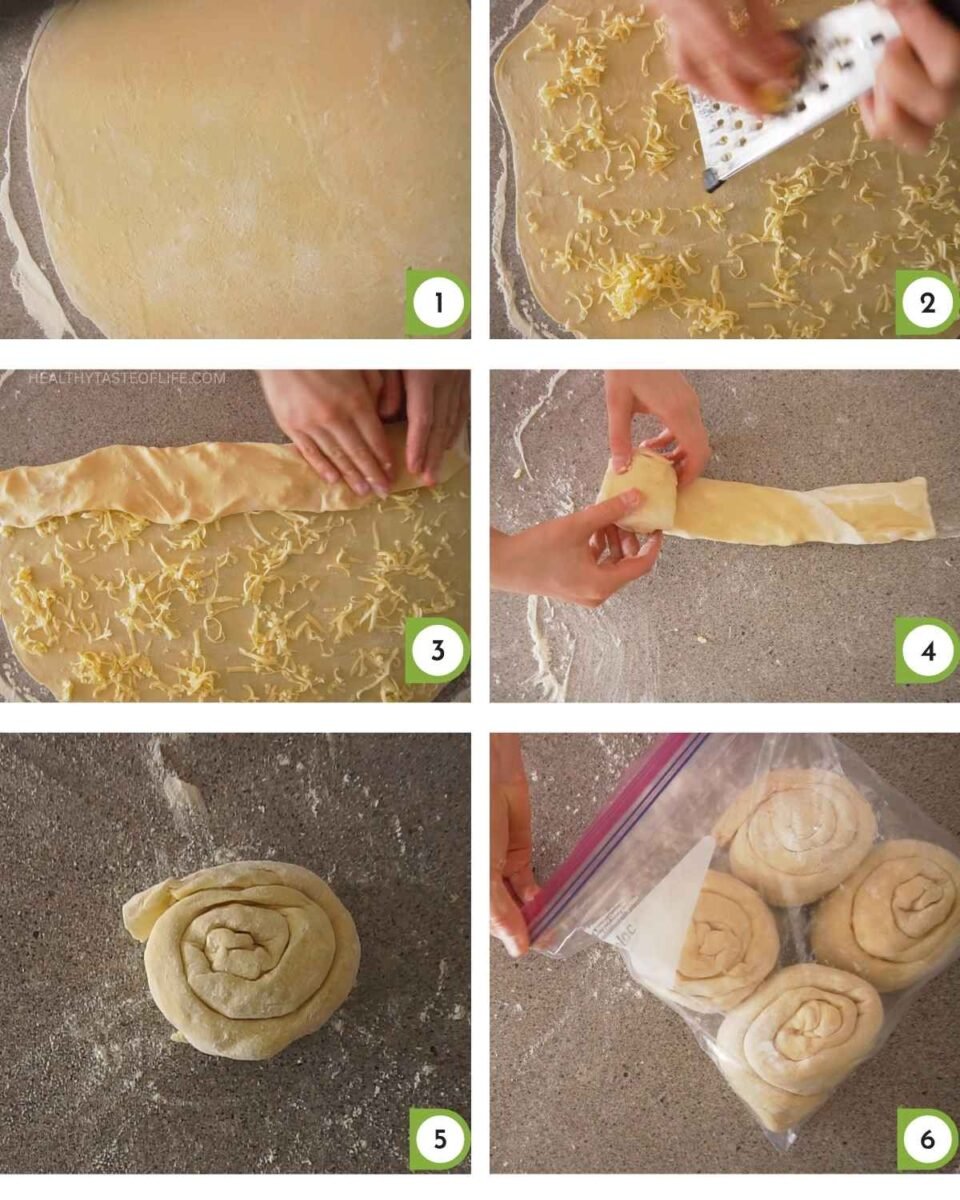
Paper-thin dough + grated frozen butter; roll into a log and chill.
3) Rest cold:
- Refrigerate at least 2 hours (overnight is ideal) so the butter re-firms and layers set. After that you can use any filling you like and bake anytime. Just re-roll the dough, spread the filling about ¼ of the rectangle, roll-up into a spiral and bake. Simple. See below more details.
4) Final roll, fill & shape:
- Prep surface: Lightly grease the table with neutral oil (I use avocado oil) for easier stretching.
- Re-roll: Take one chilled log and roll into a thin rectangle; the dough should stretch easily. Keep remaining pieces chilled.
- Spread filling: Add a thin, even layer of filling over about ¼ of the rectangle sheet (the end you’ll start rolling from). If you like more filling, use more (about 1/3 of the sheet).
- Roll & position: Roll up into a tight spiral, ending seam-side down. Transfer on a cold sheet pan (helps maintain lamination). Continue with the rest of the dough until finished filling up the sheet pan.
- Egg wash (optional): Brush lightly with beaten egg for a deeper golden finish.

Re-rolling chilled puff pastry log into a thin rectangle – ready to add any filling and bake.
Tip: Easy Ways to Shape This Dough
Single roll (fast): Spread filling over ¼–⅓ of the sheet, then roll the whole sheet up into one tight log. Slice as desired.
Slim rolls (wheels): If your sheet is big, cut into 3–4 shorter strips, spread the filling. Then roll each log thinner and coil into wheels. See the video.
Strips to make turnovers: Cut long strips, add a little filling, then fold into triangles (like apple turnovers). See Apple Turnovers for strip + flag-fold method.
Key principle: Roll the sheet very thin and create more wraps/layers. This rough puff pastry dough doesn’t behave like classic butter-block puff: thick slabs won’t rise as high. Thin sheet + tight layering = the best lift and flakes.
5) Bake
- Preheat fully: Heat oven to 390°F / 200°C. Use a fully preheated oven so butter turns to steam (lift) rather than melting out. Place pastries on a cold baking sheet.
- Bake: 30–40 minutes, or until puffed and lightly golden brown. If butter begins to leak, you can blot excess with paper towel mid-bake.
- Cool: Let cool on the pan briefly, then move to a rack. Pastries will set and crisp as they cool.
My take: For classic lift, all-purpose flour works best. Whole wheat/Einkorn/GF were less elastic and didn’t rise well.
Filling Ideas (Sweet & Savory) for This Dough
These are all great as appetizer for a large crowd, picnic, as a snack or even breakfast and lunch boxes.
- Apple (classic): Finely shredded apple + pinch of cinnamon with sprinkled sugar.
- Sweet Pumpkin: Grated raw pumpkin + a light sprinkle of sugar (and optional cinnamon/nutmeg). Spread thin; it bakes tender and sweet.
- Cherry: Pitted fresh or thawed cherries; toss with 1–2 tsp starch (per cup of fruit) to catch juices.
- Blueberry: Fresh or thawed blueberries; mix with lemon zest and starch to prevent leaks.
- Berry Chia Jam: A spoon of chia jam (lower-sugar, thick, no runoff).
- Cheese (savory): Soft cheese mix (farmer’s/ricotta/feta), lightly salted; spread thin. Add herbs if desired.
- Spinach + Feta: Wilted spinach, well-squeezed dry + crumbled feta;
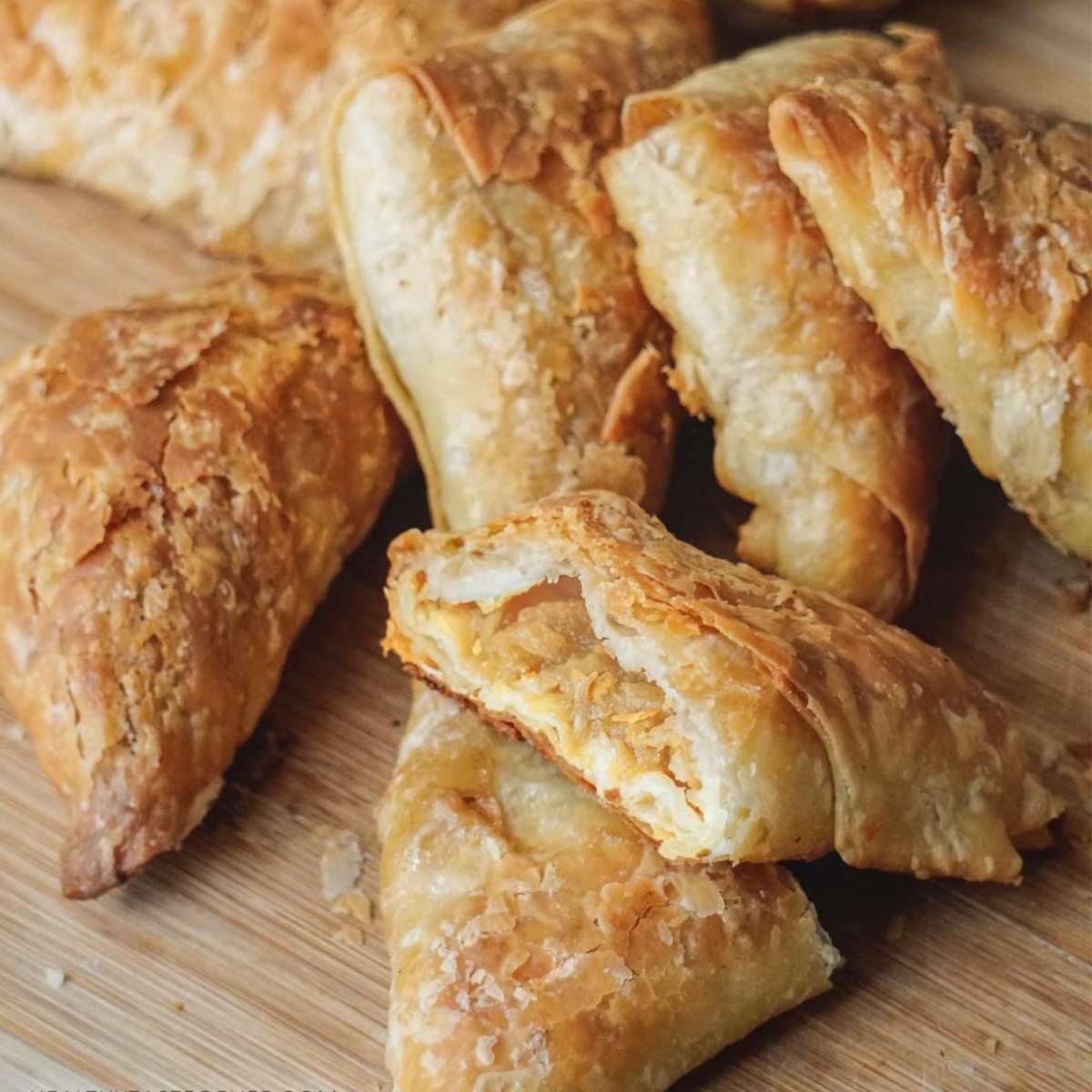
Flaky healthier apple puff pastry turnovers (light rough-puff)
How to use: Low-moisture fillings keep layers crisp. For juicy fruit, toss with a little starch and don’t overfill. Shape as single roll, thin rolls / wheels, or long strips to fold into triangles (turnovers).
Storage & Freezing
- Fridge: Once the puff pastry dough is ready, it can be used after 2 hours in the fridge or the next day. Use it within 3-4 days if you keep it refrigerated.
- Freeze: In a ziploc bag up to 2 months; thaw overnight in the fridge before using.
- Baked pieces: re-crisp in a hot oven for a few minutes.
FAQs
Is puff pastry healthy?
It’s still a pastry and best enjoyed in moderation. This version feels lighter thanks to the rough-puff method and better butter choices.
Can I make it dairy-free?
I haven’t tested coconut oil or neutral oils in this dough. If you need a DF option, I would consider a high-quality vegan butter (like Miyoko’s) as a starting point, but it’s untested here, so expect some trial and error.
Why not whole wheat or einkorn?
Whole wheat turned out darker, harder, and didn’t puff well. Einkorn tasted nice but was fragile, sticky, and prone to tearing: it lacks elasticity for classic lamination.
Can I do this gluten-free?
This particular dough relies on gluten elasticity. I don’t recommend GF blends for lamination. If you’re gluten-free, try recipes that don’t require laminated layers.
Why apple cider vinegar instead of lemon?
It’s what I use at home for a slightly more tender dough and a consistent flavor profile.
This page shares cooking tips and general nutrition perspective, not medical advice. Choose ingredients that fit your needs.
More Recipes For Your Festive Table
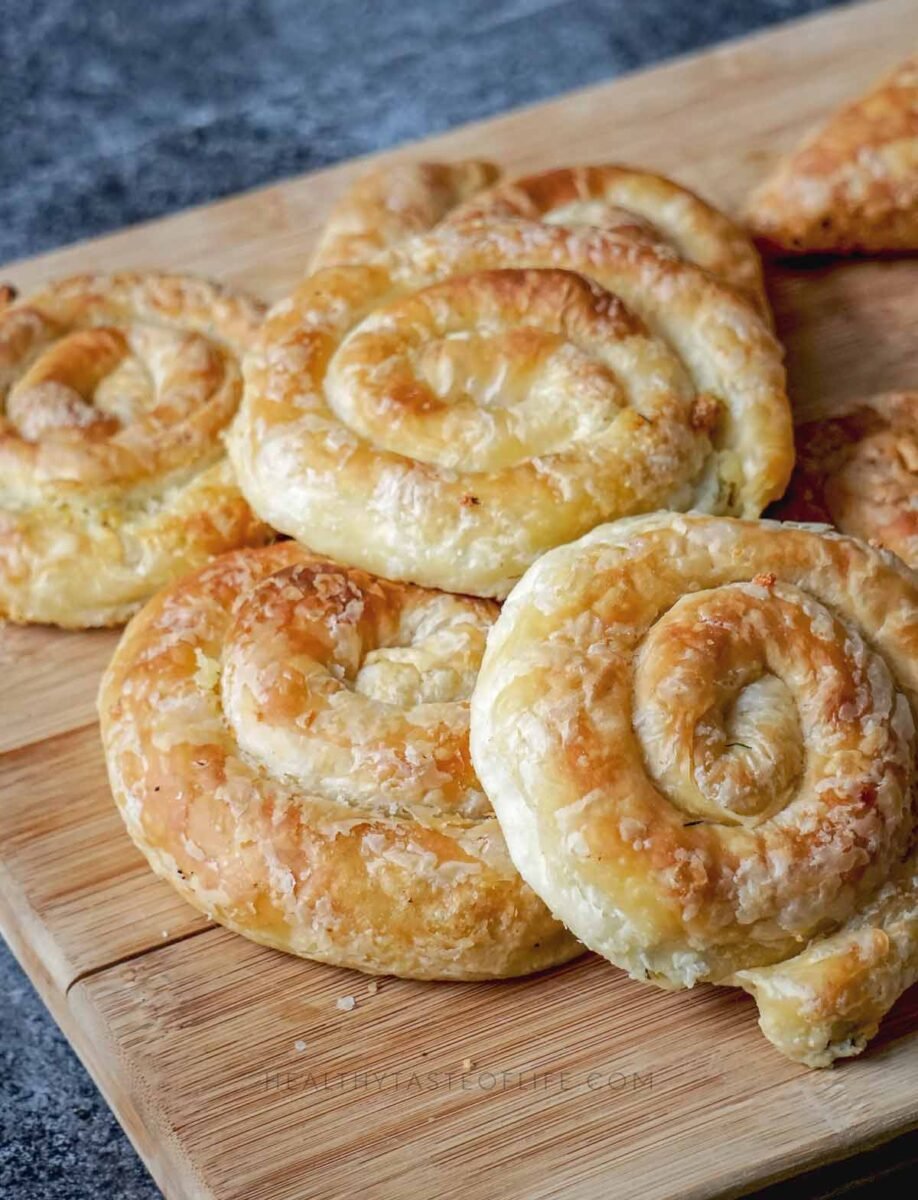
Savory Cheese Puff Pastry Pinwheels | Spirals
Healthier Apple Puff Pastry Turnovers (Light Puff)
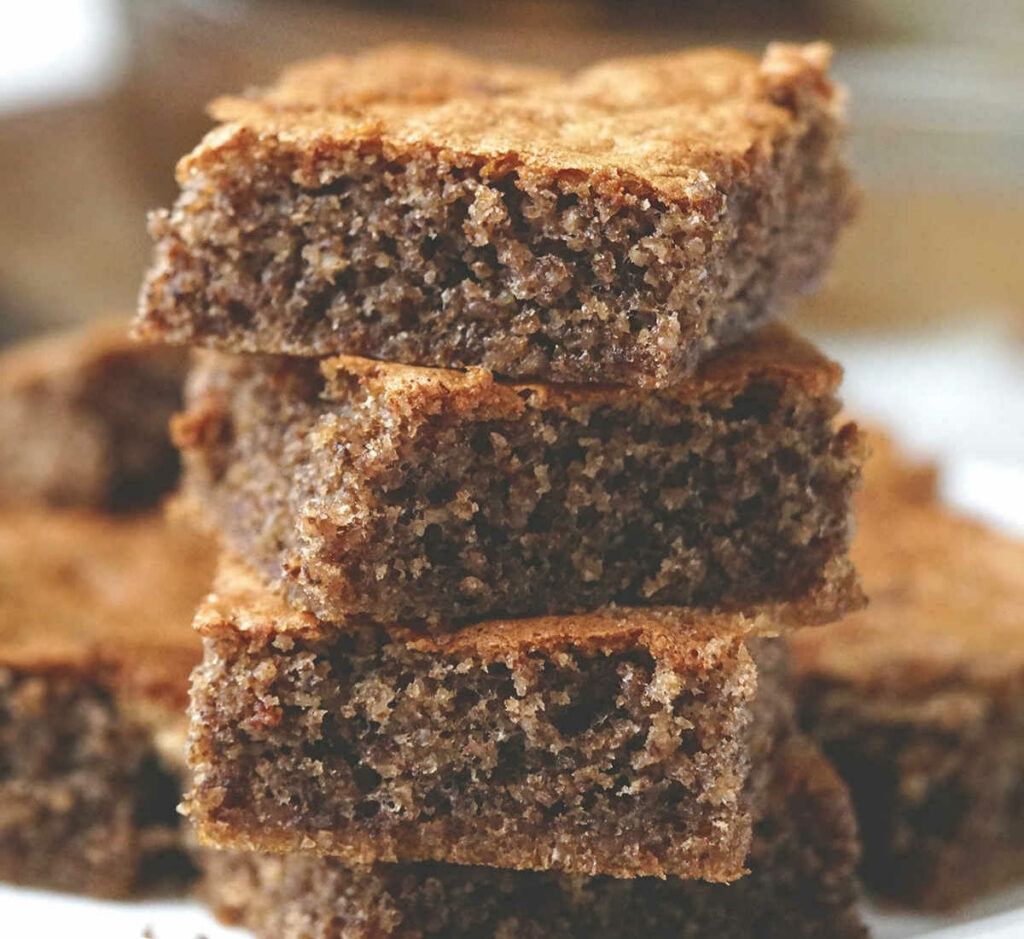
Easy Walnut Cake – Greek Inspired (GF Option)
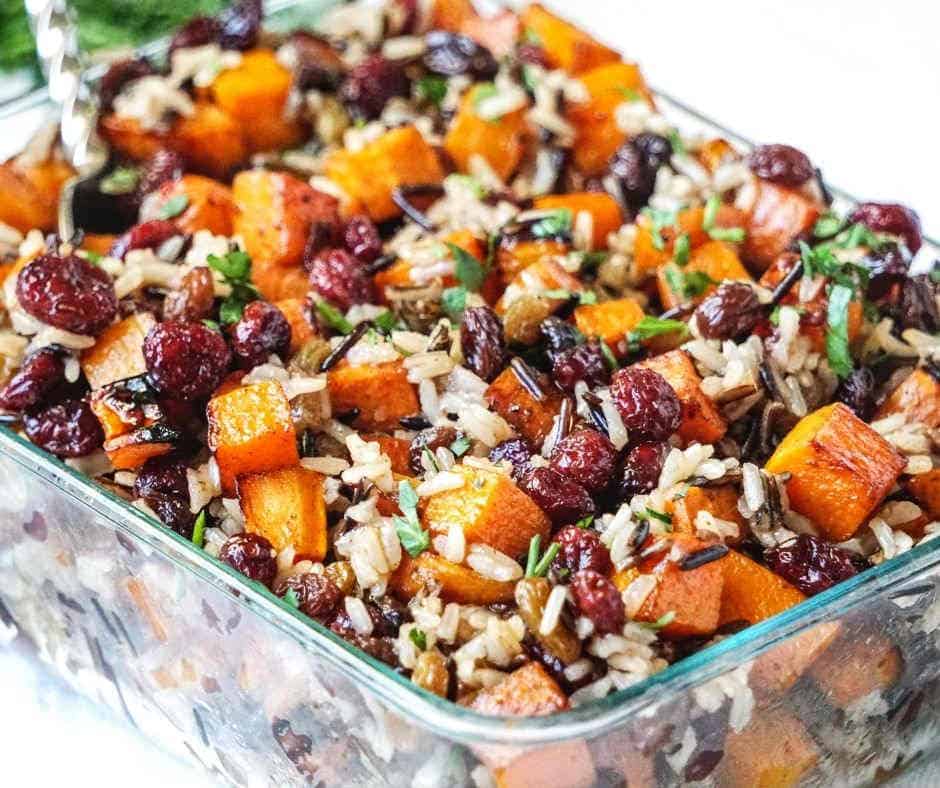
Wholesome Butternut Squash Casserole With Sweet Potato
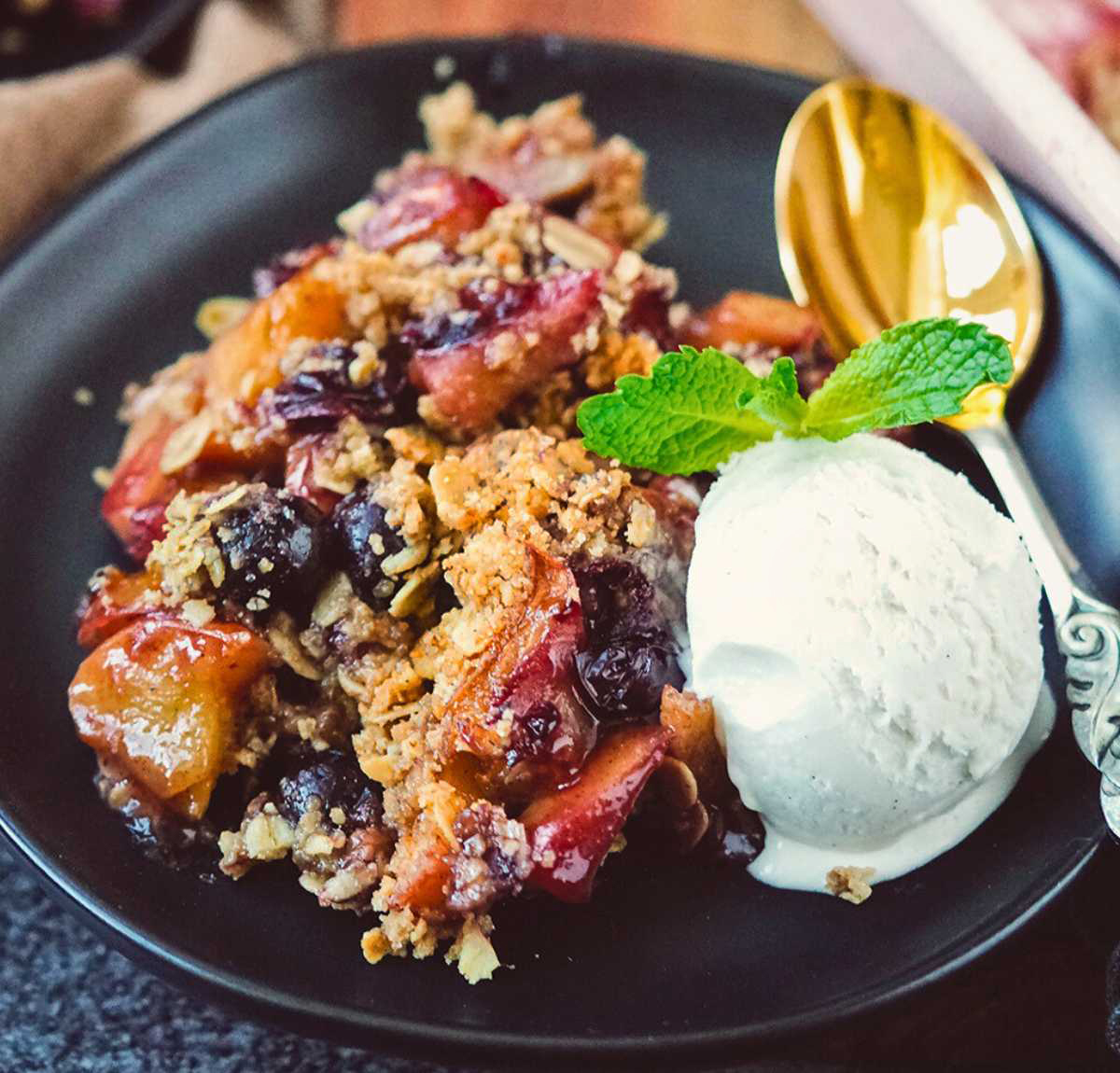
Apple And Blueberry Crumble Recipe
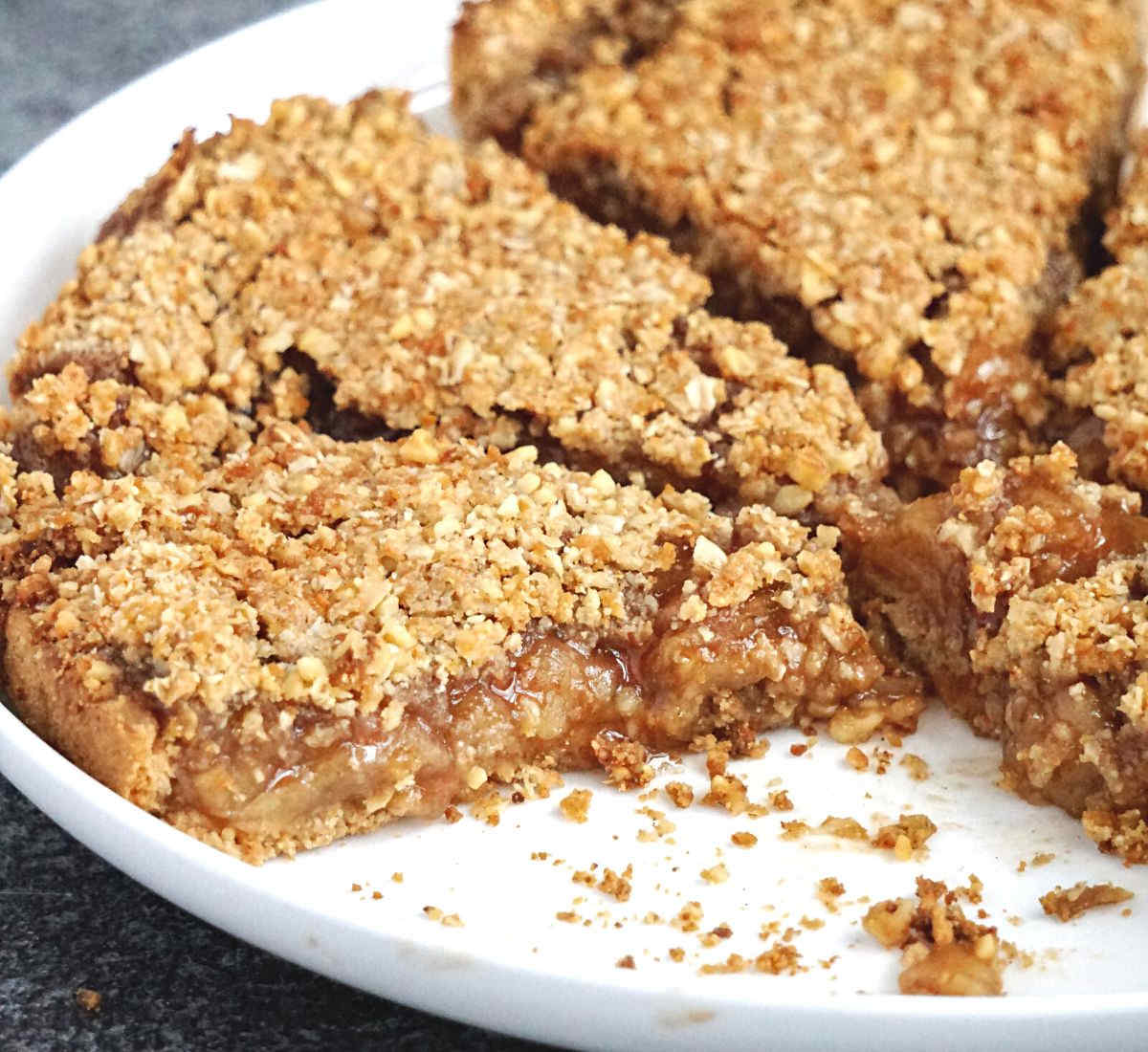
Healthy Apple Crumble Pie/Tart (Gluten Free Vegan)
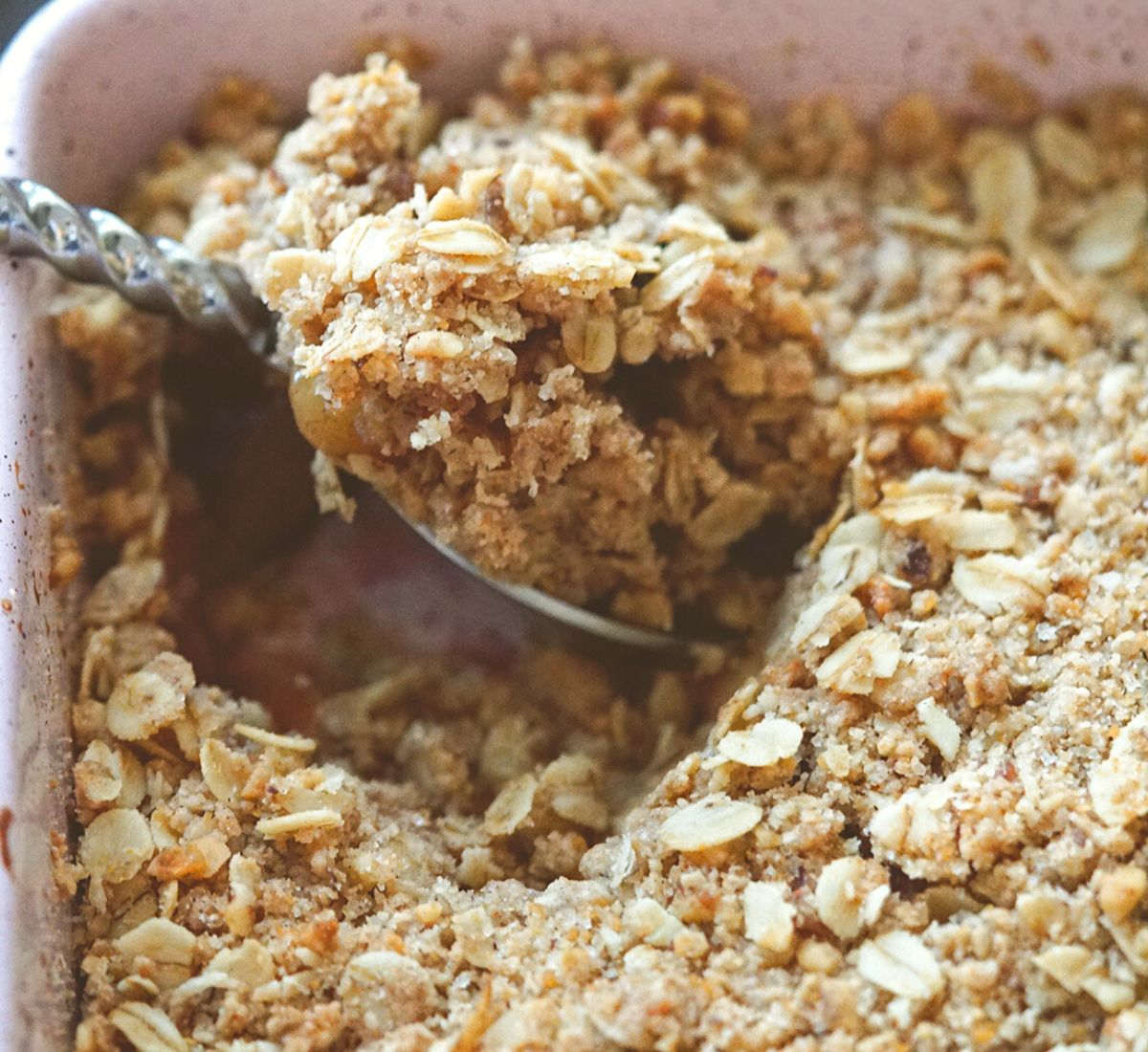
Best Healthy Oat Crumble Topping For Any Warm Baked Filing
Easy Peach Crumble With Oats (Healthy Peach Crisp)
Tried This healthy rough-puff dough? I’d love to hear how it turned out! Tap ⭐⭐⭐⭐⭐ to rate it or leave a quick comment below! your feedback helps other readers (and keeps me creating new treats).
©HealthyTasteOfLife. Content and photographs are copyright protected and need prior permission to use. Copying and/or pasting full recipes to other websites and any social media is strictly prohibited. Sharing and using the link of this recipe is both encouraged and appreciated!
6.4K
shares